Find number abc
[7300] Find number abc - If 86358 - 2a65b = 6c6bb find number abc. Multiple solutions may exist. - #brainteasers #math - Correct Answers: 5
BRAIN TEASERS
enter your answer and press button OK

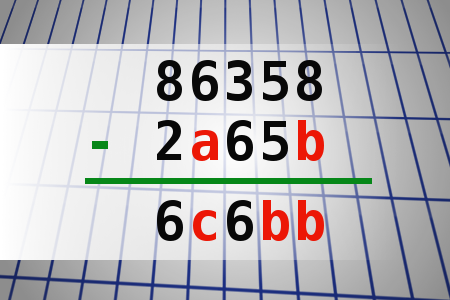
Find number abc

If 86358 - 2a65b = 6c6bb find number abc. Multiple solutions may exist.
Correct answers: 5
#brainteasers #math
Register with your Google Account and start collecting points.
Check your ranking on list.

Peanut Butter and Jelly Day Jokes

Happy National Peanut Butter and Jelly Day! Celebrate April 2, 2025 with some deliciously nutty jokes:

Why did the peanut butter break up with the jelly?
Because it felt smothered!

What’s a peanut butter and jelly sandwich’s favorite type of music?
Smooth jams.

Why did the PB&J go to therapy?
They had a lot of spread-out issues.

What did the bread say after the PB&J got together?
“You two are really my jam!”

Want more puns? Check out this hilarious list of peanut butter puns.

Why did the peanut butter apply for a job?
It wanted to spread its skills.

What do you call jelly that’s always in a rush?
Jam-packed!

Why don’t peanut butter and jelly ever get into arguments?
Because they always stick together.

Here’s another funny one: The Peanut Butter Rooster.

What’s a jelly’s favorite pickup line?
“Are you toast? ‘Cause I want to be on you.”

What did the grape jelly say to the peanut butter at the party?
“Let’s jam!”

Why did the PB&J sandwich go to school?
To become a little smarter and more well-bread!

Jokes of the day - Daily updated jokes. New jokes every day.
Follow Brain Teasers on social networks

Brain Teasers

puzzles, riddles, mathematical problems, mastermind, cinemania...

Great White Way

In 1880, New York's Broadway was first lighted by electricity and became known as the “Great White Way.” Charles F. Brush successfully demonstrated his arc lamps along Broadway. His arc lights preceded Edison's incandescent light bulb in commercial use. Arc lights were suited to applications where a bright light was needed, such as street lights and lighting in commercial and public buildings.[Image: detail from the cover of the Scientific American issue of 2 Apr 1881.]
This site uses cookies to store information on your computer. Some are essential to help the site properly. Others give us insight into how the site is used and help us to optimize the user experience. See our privacy policy.