Find number abc
[8093] Find number abc - If c8368 - a91c1 = a9a1b find number abc. Multiple solutions may exist. - #brainteasers #math - Correct Answers: 0
BRAIN TEASERS
enter your answer and press button OK

Find number abc

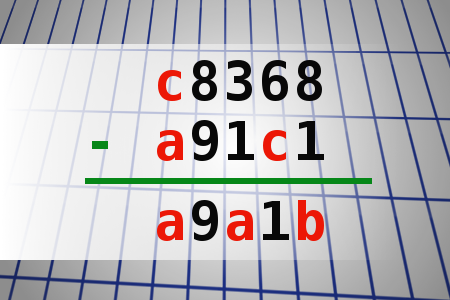
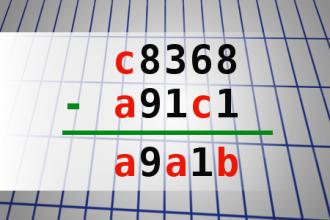
If c8368 - a91c1 = a9a1b find number abc. Multiple solutions may exist.
Correct answers: 0
#brainteasers #math
Register with your Google Account and start collecting points.
Check your ranking on list.

Letter to a Nosey Mom

A mother enters her daughter's bedroom and sees a letter over the bed. With the worst premonition, she reads it, with trembling hands:
It is with great regret and sorrow that I'm telling you that I eloped with my new boyfriend. I found real passion and he is so nice, with all his piercing and tattoos and his big motorcycle.
But is not only that mom, I'm pregnant and Ahmed said that we will be very happy in his trailer in the woods. He wants to have many more children with me and that's one of my dreams.
I've learned that marijuana doesn't hurt anyone and we'll be growing it for us and for his friends, who are providing us with all the cocaine and ecstasy we may want.
In the meantime, we'll pray for the science to find the AIDS cure, for Ahmed to get better, he deserves it.
Don't worry Mom, I'm 15 years old now and I know how to take care of myself. Some day I'll visit, so you can know your grandchildren.
Your daughter,
Judith

PS: Mom, it's not true. I'm at the neighbor's house. I just wanted to show you that there are worse things in life than the school's report card that's in my desk's drawer...I love you!  

Jokes of the day - Daily updated jokes. New jokes every day.
Follow Brain Teasers on social networks

Brain Teasers

puzzles, riddles, mathematical problems, mastermind, cinemania...

Mikhail Semyonovich Tswett

Born 14 May 1872; died 26 Jun 1919 at age 47.Russian botanist, the “father of chromatography,” who developed and named the adsorption chromatography technique of separating plant pigments by extracting them from leaves with ether and alcohol and percolating the solution through a column of calcium carbonate. The components of the mixture moved at different rates, producing a series of bands. He is known in particular for his study of the chlorophylls and the carotenoids. However, in Tswett's own lifetime, chromatography remained virtually unrecognized as a scientific tool. In the 1930s, it was rediscovered and then spread worldwide. The chromatography technique he invented is now widely used to separate substances from mixtures. (Also spelled Tsvet.)
This site uses cookies to store information on your computer. Some are essential to help the site properly. Others give us insight into how the site is used and help us to optimize the user experience. See our privacy policy.