Find the right combination
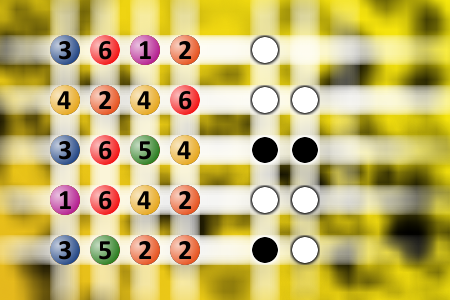
The computer chose a secret code (sequence of 4 digits from 1 to 6). Your goal is to find that code. Black circles indicate the number of hits on the right spot. White circles indicate the number of hits on the wrong spot.Correct answers: 37
The first user who solved this task is Djordje Timotijevic.
#brainteasers #mastermind

Eat The Watermelons
A farmer in the country has a watermelon patch and upon inspection he discovers that some of the local kids have been helping themselves to a feast.
The farmer thinks of ways to discourage this profit-eating situation. So he puts up a sign that reads: "WARNING! ONE OF THESE WATERMELONS CONTAINS CYANIDE!"
He smiled smugly as he watched the kids run off the next night without eating any of his melons.
The farmer returns to the watermelon patch a week later to discover that none of the watermelons have been eaten, but finds another sign that reads: "NOW THERE ARE TWO!"
The farmer thinks of ways to discourage this profit-eating situation. So he puts up a sign that reads: "WARNING! ONE OF THESE WATERMELONS CONTAINS CYANIDE!"
He smiled smugly as he watched the kids run off the next night without eating any of his melons.
The farmer returns to the watermelon patch a week later to discover that none of the watermelons have been eaten, but finds another sign that reads: "NOW THERE ARE TWO!"