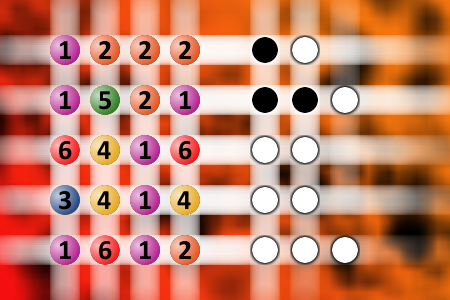
Find the right combination
The computer chose a secret code (sequence of 4 digits from 1 to 6). Your goal is to find that code. Black circles indicate the number of hits on the right spot. White circles indicate the number of hits on the wrong spot.Correct answers: 4
#brainteasers #mastermind

The Local sheriff was looking...
The Local sheriff was looking for a new deputy. When a blonde walks in to try for the job, he asks her "Okay, what is 1 and 1?"
"Eleven", she replies.
The sheriff thinks to himself, "That's not what I wanted, but I guess she's right!"
"What two days of the week begin with the letter T?" he asks.
"Today and Tomorrow", the blonde answers.
The sheriff is again surprised that the blonde has supplied a correct answer that had not even occurred to him.
"Now listen carefully, who killed Abe Lincoln?" he asks her.
The blonde looks a little surprised. She thinks really hard for a minute and finally admits, "I don't know."
"Well, why don't you go home and work on that one for a while?"
So, the blonde wanders over to the beauty parlor, where her pals are waiting to hear the results of the interview.
The blonde was exultant. "The interview went great!" she says. "First day on the job and I'm already working on a murder case!"
"Eleven", she replies.
The sheriff thinks to himself, "That's not what I wanted, but I guess she's right!"
"What two days of the week begin with the letter T?" he asks.
"Today and Tomorrow", the blonde answers.
The sheriff is again surprised that the blonde has supplied a correct answer that had not even occurred to him.
"Now listen carefully, who killed Abe Lincoln?" he asks her.
The blonde looks a little surprised. She thinks really hard for a minute and finally admits, "I don't know."
"Well, why don't you go home and work on that one for a while?"
So, the blonde wanders over to the beauty parlor, where her pals are waiting to hear the results of the interview.
The blonde was exultant. "The interview went great!" she says. "First day on the job and I'm already working on a murder case!"