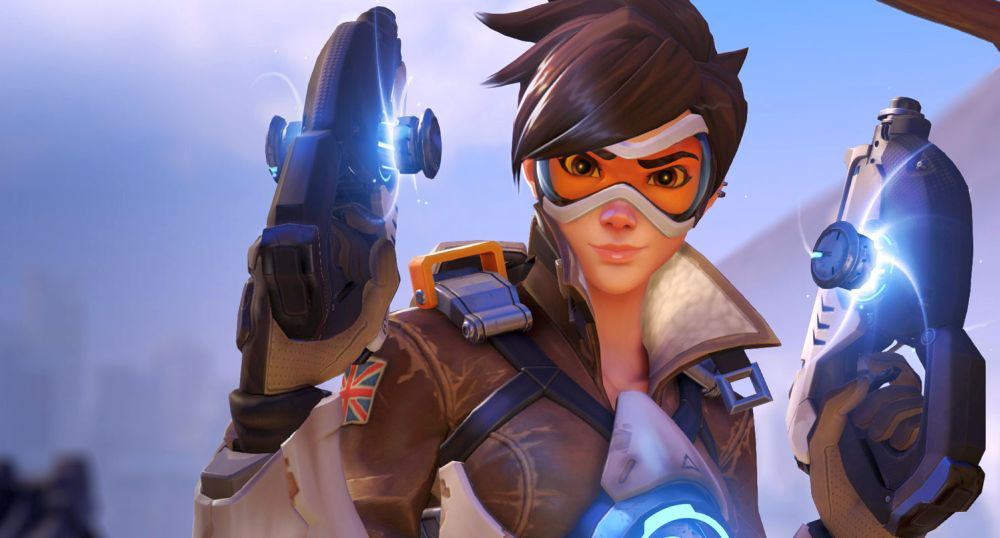
Guess the Game Name
[3782] Guess the Game Name - Look carefully the picture and guess the game name. - #brainteasers #games - Correct Answers: 23 - The first user who solved this task is Sanja Šabović
BRAIN TEASERS
enter your answer and press button OK

Guess the Game Name

Look carefully the picture and guess the game name.
Correct answers: 23
The first user who solved this task is Sanja Šabović.
#brainteasers #games
Register with your Google Account and start collecting points.
Check your ranking on list.

Shy guy in bar

A very shy guy goes into a bar and sees a beautiful woman sitting at the bar.

After an hour of gathering up his courage he finally goes over to her and asks, tentatively, "Um, would you mind if I chatted with you for a while?"

To which she responds by yelling, at the top of her lungs, "No, I won't sleep with you tonight!"

Everyone in the bar is now staring at them.

Naturally, the guy is hopelessly and completely embarrassed and he slinks back to his table.

After a few minutes, the woman walks over to him and apologizes. She smiles at him and says, "I'm sorry if I embarrassed you. You see, I'm a graduate student in psychology and I'm studying how people respond to embarrassing situations."

To which he responds, at the top of his lungs, "What do you mean $200 for a blowjob?"

Jokes of the day - Daily updated jokes. New jokes every day.
Follow Brain Teasers on social networks

Brain Teasers

puzzles, riddles, mathematical problems, mastermind, cinemania...

John N. Bahcall

Died 17 Aug 2005 at age 70 (born 30 Dec 1934). American astrophysicist who pioneered the development of neutrino astrophysics in the early 1960s. He theorized that neutrinos (subatomic particles that have no charge and exceedingly weak interaction with matter) can be used to understanding how stars shine. They are emitted by the sun and stars during the fusion energy creation process, and most are able to pass through the Earth without being stopped. He calculated the expected output of neutrinos from the sun, which created an experimental challenge to explain the unexpected result. He won the National Medal of Science (1998) for both his contributions to the planning and development of the Hubble Space Telescope and his pioneering research in neutrino astrophysics.«
This site uses cookies to store information on your computer. Some are essential to help the site properly. Others give us insight into how the site is used and help us to optimize the user experience. See our privacy policy.