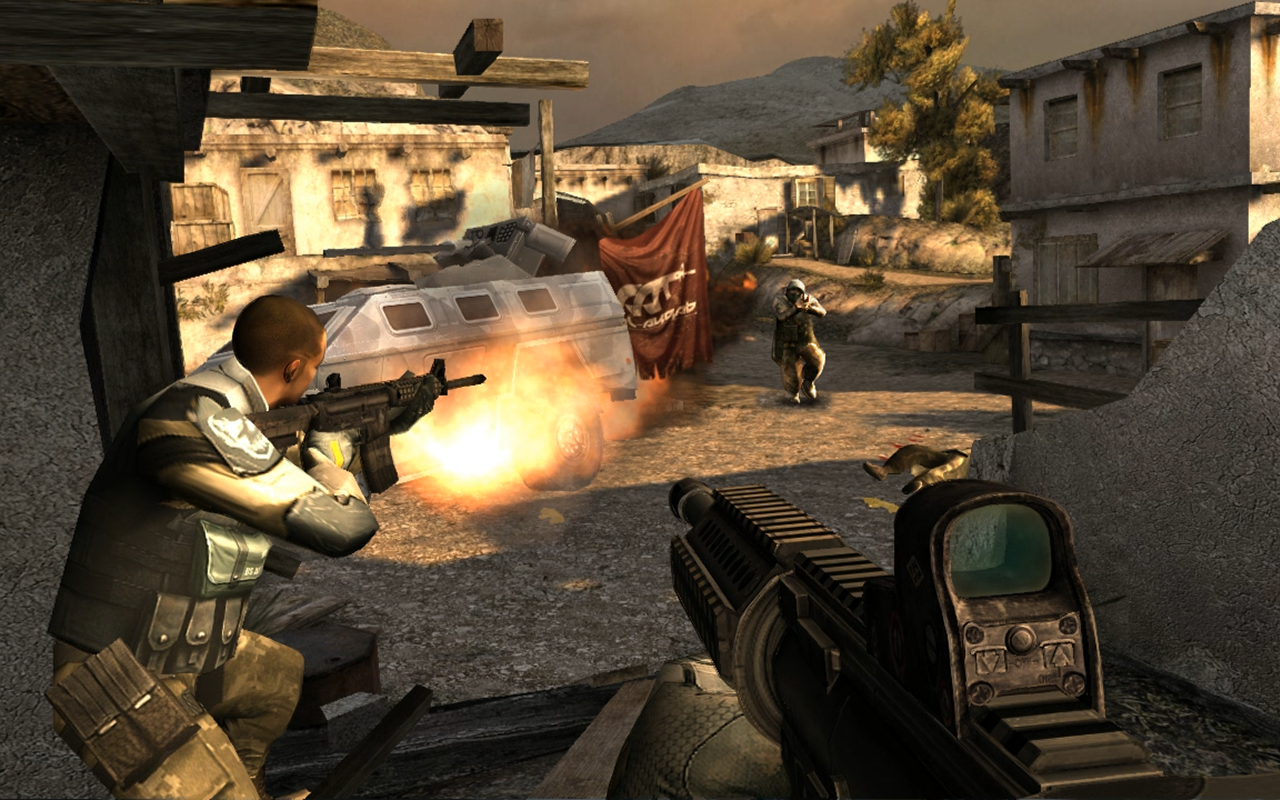
Guess the Game Name
[4925] Guess the Game Name - Look carefully the picture and guess the game name. - #brainteasers #games - Correct Answers: 18 - The first user who solved this task is Djordje Timotijevic
BRAIN TEASERS
enter your answer and press button OK

Guess the Game Name

Look carefully the picture and guess the game name.
Correct answers: 18
The first user who solved this task is Djordje Timotijevic.
#brainteasers #games
Register with your Google Account and start collecting points.
Check your ranking on list.

Ten Witch Jokes for Halloween

Q) Why do witches wear name tags?
A) So they will know which witch is which.

Q) What do you call two witches sharing an apartment?
A) Broom-mates

Q) What is a little witch's favorite subject in school?
A) Spell-ing

Q) How does a witch tell time?
A) She looks at her witch-watch.

Q) Why did the witch give up fortune telling?
A) Because there was no future in it.

Q) What is the difference between a witch and the letters "M, A, K, E, S?"
A) One makes spells and the other spells "makes."

Q) What did the witch serve her friends who dropped in at dinner time?
A) Potluck

Q) How do you make a witch itch?
A) Take away the "w."

Q) Why is a witch's face like a million dollars?
A) It's green and wrinkly.

Q) What do witches use on their hair?
A) Scare spray.

Jokes of the day - Daily updated jokes. New jokes every day.
Follow Brain Teasers on social networks

Brain Teasers

puzzles, riddles, mathematical problems, mastermind, cinemania...

Bronislaw Malinowski

Born 7 Apr 1884; died 16 May 1942 at age 58. Bronislaw Kasper Malinowski was a Polish-British anthropologist, one of the most important in the 20th century, who is widely recognized as the founder of social anthropology. He is principally associated with field studies of the peoples of Oceania. In 1914, on a research assignment to Australia, the outbreak of WW I kept him partially confined to the Trobriand Islands, off the eastern tip of New Guinea. In 1920, he returned to teaching in London, and in 1938 moved to teach in the U.S. He was the pioneer of “participant observation”as a method of fieldwork, used in his works on the Trobriand Islanders, especially Argonauts of the Western Pacific (1922) and Coral Gardens and their Magic (2 vols, 1935), which set new standards for ethnographic description.
This site uses cookies to store information on your computer. Some are essential to help the site properly. Others give us insight into how the site is used and help us to optimize the user experience. See our privacy policy.