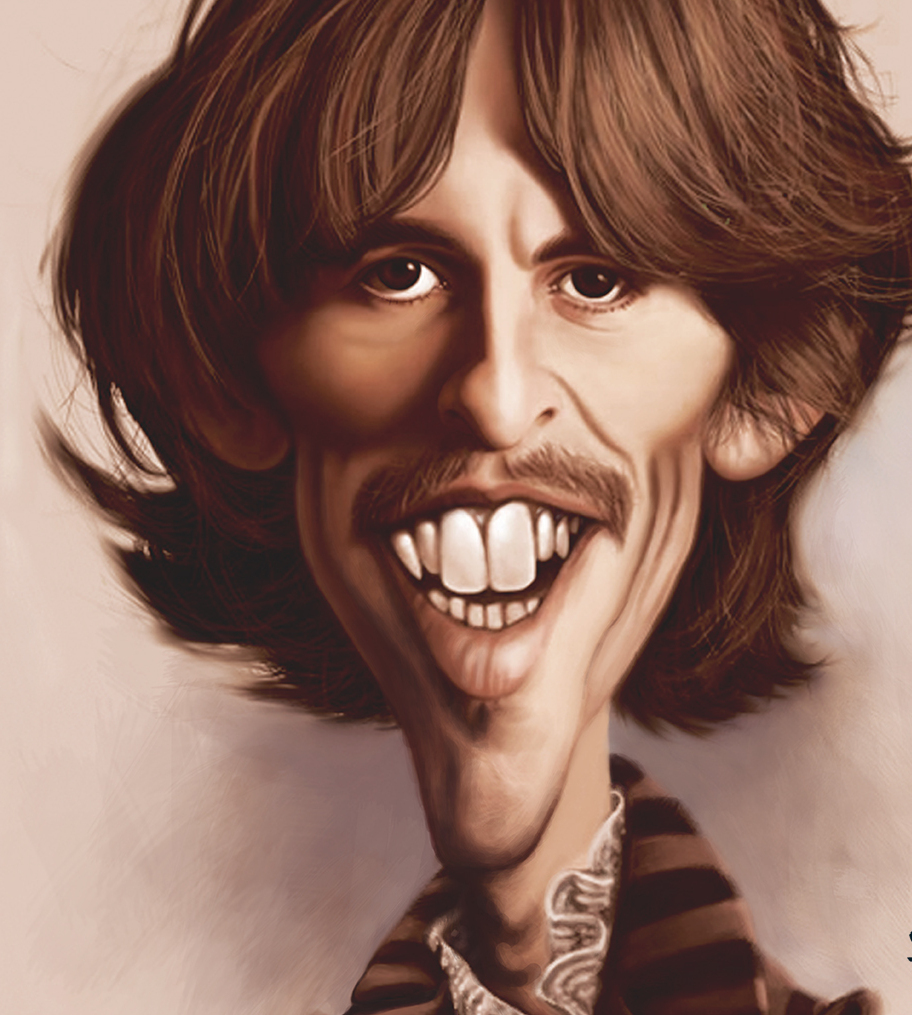
Guess the name of musician
[4352] Guess the name of musician - Look carefully caricature and guess the name of musician. - #brainteasers #music - Correct Answers: 65 - The first user who solved this task is Manguexa Wagle
BRAIN TEASERS
enter your answer and press button OK

Guess the name of musician

Look carefully caricature and guess the name of musician.
Correct answers: 65
The first user who solved this task is Manguexa Wagle.
#brainteasers #music
Register with your Google Account and start collecting points.
Check your ranking on list.

A minister decided that a visu...

A minister decided that a visual demonstration would add emphasis to his Sunday sermon.
Four worms were placed into four separate jars.
The first worm was put into a container of alcohol.
The second worm was put into a container of cigarette smoke.
The third worm was put into a container of chocolate syrup..
The fourth worm was put into a container of good clean soil.
At the conclusion of the sermon, the Minister reported the following results:
The first worm in alcohol - Dead.
The second worm in cigarette smoke - Dead
Third worm in chocolate syrup - Dead
Fourth worm in good clean soil - Alive.
So the Minister asked the congregation -
What did you learn from this demonstration?
Old Maxine was sitting in the back smoking a cigarette along with a shot of Jack Daniels in her hand, quickly raised her other hand and said, 'As long as you drink, smoke and eat chocolate, you won't have worms!'
That pretty much ended the service.
Jokes of the day - Daily updated jokes. New jokes every day.
Follow Brain Teasers on social networks

Brain Teasers

puzzles, riddles, mathematical problems, mastermind, cinemania...

Julius Wagner-Jauregg

Born 7 Mar 1857; died 27 Sep 1940 at age 83.Austrian psychiatrist and neurologist whose made the first use of a shock therapy. He investigated the connections between thyroid function, goitre and cretinism. On his advice the Government, some time later, started selling salt with added iodine, in the areas most affected by goitre. His main life's work built on an earlier observation that certain nervous disorders improved in patients who had caught a fever-inducing illness. He applied this in the treatment of syphilitic meningoencephalitis, or general paresis, by deliberately inducing malaria (chosen because it could be controlled with quinine). The method brought a previously incurable fatal disease under medical control and earned him the 1927 Nobel Prize in Physiology or Medicine.
This site uses cookies to store information on your computer. Some are essential to help the site properly. Others give us insight into how the site is used and help us to optimize the user experience. See our privacy policy.