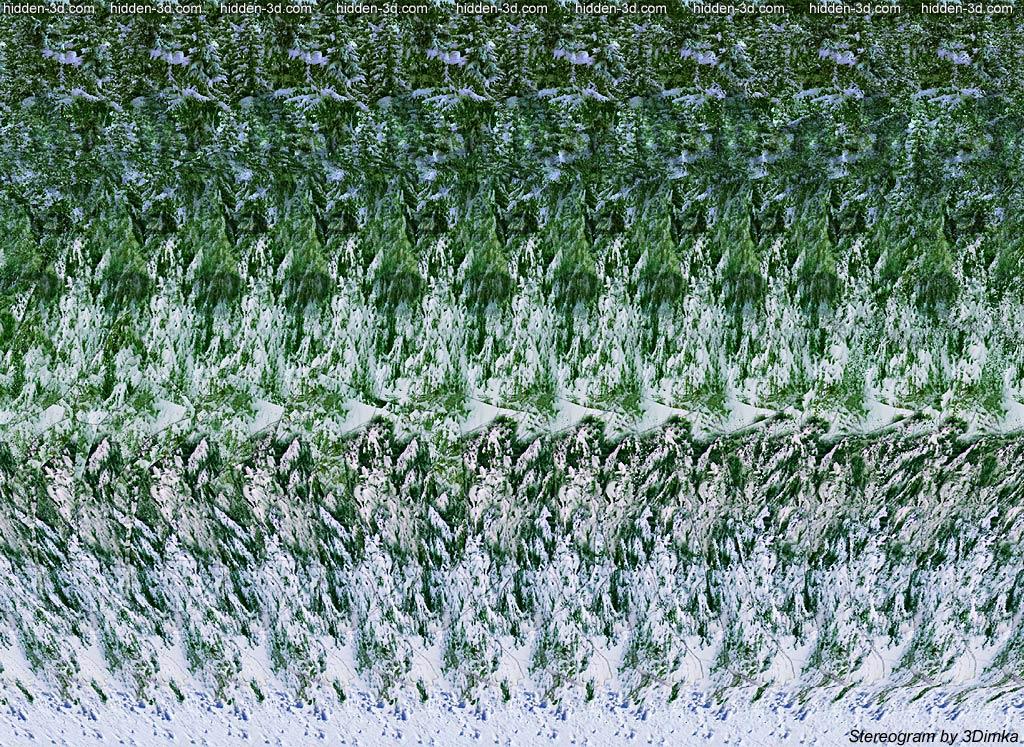
What hides this stereogram?
[4351] What hides this stereogram? - Stereogram - 3D Image - #brainteasers #stereogram #3Dimage
BRAIN TEASERS

What hides this stereogram?

Stereogram - 3D Image
#brainteasers #stereogram #3Dimage
Register with your Google Account and start collecting points.
Check your ranking on list.

A Man's World

You know you're in a man's ideal world when:
1. Any fake phone number a girl gave you would automatically forward your call to her real number.
2. Nodding and looking at your watch would be deemed an acceptable response to "I love you."
3. When your girlfriend really needed to talk to you during the game, she'd appear in a little box in the corner of the screen during a time-out.
4. Breaking up would be a lot easier. A smack to the backside and a "Nice hustle, you'll get 'em next time" would pretty much do it.
5. Each year, your raise would be pegged to the fortunes of the football team of your choice.
6. At the end of the workday, a whistle would blow and you'd jump out your window and slide down the tail of a brontosaurus and right into your car like Fred Flintstone.
7. Instead of an expensive engagement ring, you could present your wife-to-be with a giant foam hand that said, "You're #1!"
8. It would be perfectly legal to steal a sports car, as long as you returned it the following day with a full tank of gas.
Jokes of the day - Daily updated jokes. New jokes every day.
Follow Brain Teasers on social networks

Brain Teasers

puzzles, riddles, mathematical problems, mastermind, cinemania...

Carl Wilhelm Scheele

Born 9 Dec 1742; died 21 May 1786 at age 43. (also Karl) Swedish chemist who discovered oxygen in 1772. Scheele, a keen experimenter, worked in difficult and often hazardous conditions. In his only book, Chemical Observations and Experiments on Air and Fire (1777), he stated that the atmosphere is composed of two gases, one supporting combustion, which he named "fire air" (oxygen), and the other preventing it, which he named "vitiated air" (nitrogen). Due to delay in his publication, he lost priority to Priestley's discovery of oxygen in 1774. Scheele discovered many substances, such as chlorine (1774), manganese (1774), tungsten (1781), molybdenum (1782), glycerol, hydrocyanic (prussic) acid, citric acid, hydrogen sulphide and hydrogen fluoride. He also discovered a process resembling pasteurization.
This site uses cookies to store information on your computer. Some are essential to help the site properly. Others give us insight into how the site is used and help us to optimize the user experience. See our privacy policy.