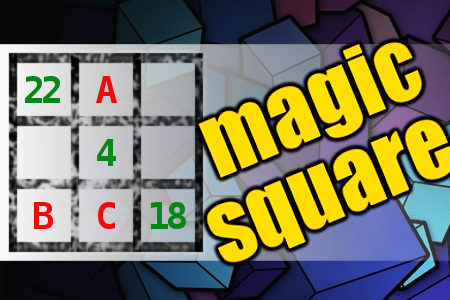
MAGIC SQUARE: Calculate A-B+C
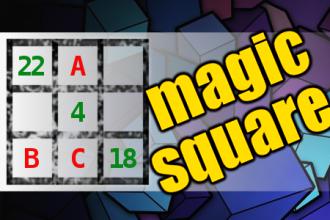
The aim is to place the some numbers from the list (4, 6, 7, 10, 18, 20, 21, 22, 24, 25, 65) into the empty squares and squares marked with A, B an C. Sum of each row and column should be equal. All the numbers of the magic square must be different. Find values for A, B, and C. Solution is A-B+C.Correct answers: 1
#brainteasers #math #magicsquare

There were two buddies, one wi...
There were two buddies, one with a Doberman Pinscher and the other with a Chihuahua. The guy with the Doberman Pinscher says to his friend, "Let's go over to that restaurant and get something to eat."
The guy with the Chihuahua says, "We can't go in there. We've got dogs with us."
The buddy with the Doberman Pinscher says, "Just follow my lead."
They walk over to the restaurant, the guy with the Doberman Pinscher puts on a pair of dark glasses and he starts to walk in. The bouncer at the door says, "Sorry, mac, no pets allowed."
The man with the Doberman Pinscher says, "You don't understand. This is my seeing-eye-dog."
The bouncer says, "A Doberman Pinscher?"
He answers, "Yes, they're using them now; they're very good and protect me from robbers, too."
The man at the door says, "Come on in."
The buddy with the Chihuahua figures, "What the heck," so he puts on a pair of dark glasses and starts to walk in.
Once again the bouncer says, "Sorry, pal, no pets allowed."
The guy with the Chihuahua says, "You don't understand. This is my seeing-eye dog."
The bouncer at the door says, "A Chihuahua?"
The man with the Chihuahua says, "A Chihuahua?????? They gave me a Chihuahua?!"
The guy with the Chihuahua says, "We can't go in there. We've got dogs with us."
The buddy with the Doberman Pinscher says, "Just follow my lead."
They walk over to the restaurant, the guy with the Doberman Pinscher puts on a pair of dark glasses and he starts to walk in. The bouncer at the door says, "Sorry, mac, no pets allowed."
The man with the Doberman Pinscher says, "You don't understand. This is my seeing-eye-dog."
The bouncer says, "A Doberman Pinscher?"
He answers, "Yes, they're using them now; they're very good and protect me from robbers, too."
The man at the door says, "Come on in."
The buddy with the Chihuahua figures, "What the heck," so he puts on a pair of dark glasses and starts to walk in.
Once again the bouncer says, "Sorry, pal, no pets allowed."
The guy with the Chihuahua says, "You don't understand. This is my seeing-eye dog."
The bouncer at the door says, "A Chihuahua?"
The man with the Chihuahua says, "A Chihuahua?????? They gave me a Chihuahua?!"