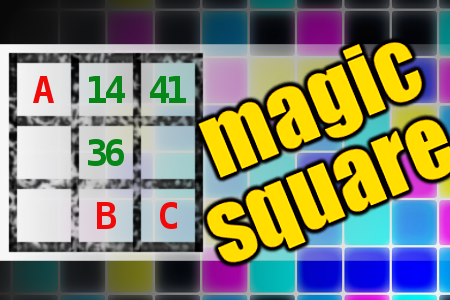
MAGIC SQUARE: Calculate A+B+C
The aim is to place the some numbers from the list (2, 14, 16, 21, 30, 34, 36, 41, 47, 49, 54, 79) into the empty squares and squares marked with A, B an C. Sum of each row and column should be equal. All the numbers of the magic square must be different. Find values for A, B, and C. Solution is A+B+C.
Gin Jokes - to celebrate World Gin Day
Second Saturday in June is World Gin Day. Celebrate it with short jokes
They say gin can damage your short-term memory.
If that's the case, just imagine what gin can do.
I love water -
especially when it's frozen in cubes and surrounded by gin.
An Oxford comma walks into a bar -
and orders a gin, and tonic.
I tried to say no to gin -
but it's 42.5% stronger than me
A true friend reaches for your hand …
and puts a glass of gin in it.
Charles Dickens: A martini please.
Bartender: Olive or twist?
A gorilla goes up to a bar and asks for a gin and tonic.
The bartender makes the G&T and says: "That'll be £20 - and I must say we don't get many gorillas in here."
The gorilla replies: "With prices like that, I'm not surprised."
Woman: I love you.
Man: Is that you or the gin talking?
Woman: It's me talking to the gin.
Don't cry over spilt milk:
it could have been gin.
My main ambition as a gardener is to water my orange trees with gin.
Then all I have to do is squeeze the juice into a glass
"Trust me you can dance."
- Gin
PLEASE DRINK GIN RESPONSIBLY.
Don't spill it.
Neutron: How much is a G&T?
Bartender: For you - no charge.
I'm on a gin and tonic diet:
I lost three days last week.