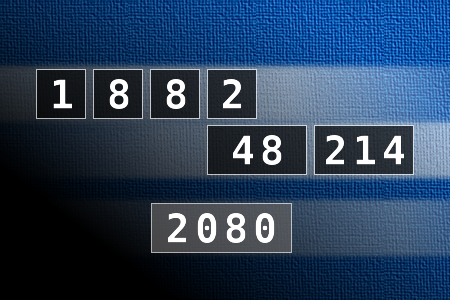
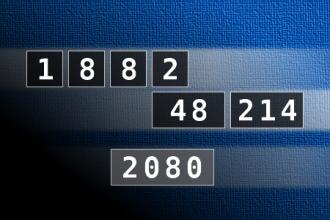
Calculate the number 2080
[7830] Calculate the number 2080 - NUMBERMANIA: Calculate the number 2080 using numbers [1, 8, 8, 2, 48, 214] and basic arithmetic operations (+, -, *, /). Each of the numbers can be used only once. - #brainteasers #math #numbermania - Correct Answers: 1
BRAIN TEASERS
enter your answer and press button OK

Calculate the number 2080

NUMBERMANIA: Calculate the number 2080 using numbers [1, 8, 8, 2, 48, 214] and basic arithmetic operations (+, -, *, /). Each of the numbers can be used only once.
Correct answers: 1
#brainteasers #math #numbermania
Register with your Google Account and start collecting points.
Check your ranking on list.

A sweet grandmother telephoned...

A sweet grandmother telephoned St. Joseph's Hospital and she timidly asked, "Is it possible to speak to someone who can tell me how a patient is doing?"
The operator responded, "I'll be glad to help, dear. What's the patient's name and room number?"
The grandmother in her weak tremulous voice said, "Norma Findlay, Room 302."
The operator replied, "Let me place you on hold while I check with her nurse."
After a few minutes the operator returned to the phone, "Oh, good news. Her nurse has told me that Norma is doing very well. Her blood pressure is fine; her blood work just came back as normal. And her physician, Dr.Cohen, has scheduled her to be discharged Tuesday."
The grandmother said, "Thank you. That's wonderful. I was so worried! God bless you for the good news."
The operator replied, "You're more than welcome. Is Norma your daughter?"
The grandmother said, "No, I'm Norma Findlay in Room 302. No one tells me anything."
Jokes of the day - Daily updated jokes. New jokes every day.
Follow Brain Teasers on social networks

Brain Teasers

puzzles, riddles, mathematical problems, mastermind, cinemania...

First telegraph used in railroading

In 1851, the first time train dispatching by telegraph in the U.S. took place when superintendent Charles Minot, of the Erie Railroad telegraphed 14 miles to Goshen, N.Y., to delay a train so that his train would not have to wait. Within weeks, all Erie trains were controlled by the telegraphed orders of a train dispatcher. Until that time the timetable was the sole authority for moving trains on the line. The “time interval rule” was cumbersome: a train had to wait one hour for an opposing train. If the train still didn't arrive, the brakeman on the waiting train must walk for 20 minutes ahead of his train with a red flag to stop the late train. The engineer of the waiting train would then operate to catch up to the brakeman. The routine was repeated as necessary.
This site uses cookies to store information on your computer. Some are essential to help the site properly. Others give us insight into how the site is used and help us to optimize the user experience. See our privacy policy.