MAGIC SQUARE: Calculate A+B*C
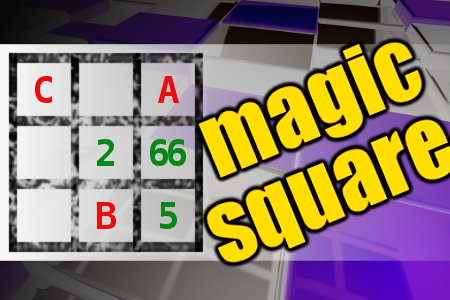
[7899] MAGIC SQUARE: Calculate A+B*C - The aim is to place the some numbers from the list (2, 4, 5, 6, 7, 9, 31, 64, 66, 68, 90) into the empty squares and squares marked with A, B an C. Sum of each row and column should be equal. All the numbers of the magic square must be different. Find values for A, B, and C. Solution is A+B*C. - #brainteasers #math #magicsquare - Correct Answers: 2
BRAIN TEASERS
enter your answer and press button OK

MAGIC SQUARE: Calculate A+B*C

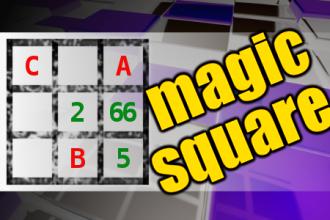
The aim is to place the some numbers from the list (2, 4, 5, 6, 7, 9, 31, 64, 66, 68, 90) into the empty squares and squares marked with A, B an C. Sum of each row and column should be equal. All the numbers of the magic square must be different. Find values for A, B, and C. Solution is A+B*C.
Correct answers: 2
#brainteasers #math #magicsquare
Register with your Google Account and start collecting points.
Check your ranking on list.

Buy Machine Factory

An American manufacturer is showing his machine factory to a potential customer from Albania. At noon, when the lunch whistle blows, two thousand men and women immediately stop work and leave the building.
"Your workers, they're escaping!" cries the visitor. "You've got to stop them."
"Don't worry, they'll be back," says the American. And indeed, at exactly one o'clock the whistle blows again, and all the workers return from their break.
When the tour is over, the manufacturer turns to his guest and says, "Well, now, which of these machines would you like to order?"
"Forget the machines," says the visitor. "How much do you want for that whistle?"
Jokes of the day - Daily updated jokes. New jokes every day.
Follow Brain Teasers on social networks

Brain Teasers

puzzles, riddles, mathematical problems, mastermind, cinemania...

Charles-Adolphe Wurtz

Died 12 May 1884 at age 66 (born 26 Nov 1817). French chemist and educator noted for his research on organic nitrogen compounds, hydrocarbons, and glycols. In 1848, he studied a group of compounds related to ammonia called amines and showed they belonged to a type with a nitrogen nucleus. In ammonia a nitrogen atom was bound to three hydrogens, whereas in amines, organic radicals replaced one or more of these hydrogens.
This site uses cookies to store information on your computer. Some are essential to help the site properly. Others give us insight into how the site is used and help us to optimize the user experience. See our privacy policy.