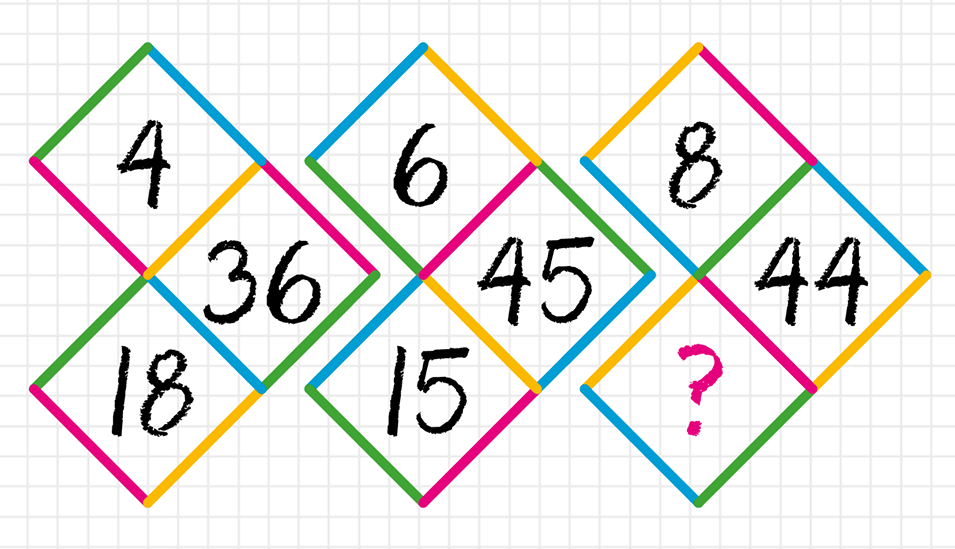
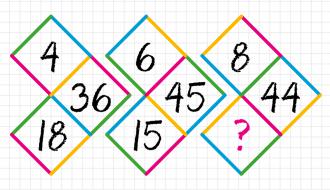
MATH PUZZLE: Can you replace...
MATH PUZZLE: Can you replace the question mark with a number?Correct answers: 604
The first user who solved this task is Roxana zavari.
#brainteasers #math #riddles

Three Blonds On Death Row
Three women are about to be executed for crimes. One's a brunette, one's a redhead, and one's a blonde.
Two guards brings the brunette forward, and the executioner asks if she has any last requests. She says no, and the executioner shouts, "Ready . . . Aim . . ."
Suddenly the brunette yells, "earthquake!!" Everyone is startled and looks around. She manages to escape.
The angry guards then bring the redhead forward, and the executioner asks if she has any last requests. She says no, and the executioner shouts, "Ready . . . Aim . . ."
The redhead then screams, "tornado!!" Yet again, everyone is startled and looks around. She too escapes execution.
By this point, the blonde had figured out what the others did. The guards bring her forward, and the executioner asks if she has any last requests. She also says no, and the executioner shouts, Ready . . . Aim . . ."
The blonde shouts, "fire!!"
Two guards brings the brunette forward, and the executioner asks if she has any last requests. She says no, and the executioner shouts, "Ready . . . Aim . . ."
Suddenly the brunette yells, "earthquake!!" Everyone is startled and looks around. She manages to escape.
The angry guards then bring the redhead forward, and the executioner asks if she has any last requests. She says no, and the executioner shouts, "Ready . . . Aim . . ."
The redhead then screams, "tornado!!" Yet again, everyone is startled and looks around. She too escapes execution.
By this point, the blonde had figured out what the others did. The guards bring her forward, and the executioner asks if she has any last requests. She also says no, and the executioner shouts, Ready . . . Aim . . ."
The blonde shouts, "fire!!"