Remove 6 letters from this s...
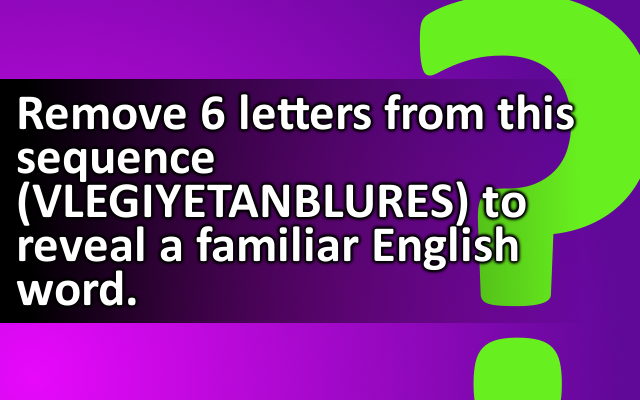
Remove 6 letters from this sequence (VLEGIYETANBLURES) to reveal a familiar English word.
Donald Trump's top jokes about White House chaos at Gridiron Dinner
On White House turmoil: "It’s invigorating since you want turnover. I like chaos ... Who’s going to be the next to leave? Steve Miller, or Melania?"
On his son-in-law Jared Kushner: "We were late tonight because Jared could not get through security."
On Vice President Mike Pence: "He is one of the best straight men you're ever going to meet ... he is straight. Man." Trump also said, "I really am proud to call him the apprentice "
On Attorney General Jeff Sessions: "I offered him a ride over and he recused himself. What are you going to do?"
On Kim Jong Un: "I won't rule out direct talks with Kim Jong Un. I just won't. As far as the risk of dealing with a madman is concerned, that's his problem, not mine. It's his problem."
On The New York Times: "I'm a New York icon. You're a New York icon. And the only difference is I still own my buildings."
On former chief strategist Steven Bannon: "That guy leaked more than the Titanic."
On the first lady: Trump said he doesn't understand why everyone says freemelania. He said she's actually having a great time