
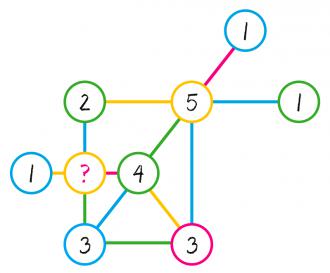
MATH PUZZLE: Can you replace...
[2664] MATH PUZZLE: Can you replace... - MATH PUZZLE: Can you replace the question mark with a number? - #brainteasers #math #riddles - Correct Answers: 288 - The first user who solved this task is Erkain Mahajanian
BRAIN TEASERS
enter your answer and press button OK

MATH PUZZLE: Can you replace...

MATH PUZZLE: Can you replace the question mark with a number?
Correct answers: 288
The first user who solved this task is Erkain Mahajanian.
#brainteasers #math #riddles
Register with your Google Account and start collecting points.
Check your ranking on list.

Most Useless Inventions


  1. Non stick Cellotape
  2. Solar Powered Flash Light
  3. A black highlighter pen
  4. Glow in the dark sunglasses
  5. Inflatable Anchor
  6. Smooth Sandpaper
  7. Waterproof sponge
  8. Waterproof Teabags
  9. AC adapter for Solar powered calculators
  10. Fireproof Matches
  11. Fireproof Cigarettes
  12. Battery powered Battery Charger
  13. Seatbelts for Motorbikes
  14. Hand powered Chainsaw
  15. Inflatable Dartboard
  16. Silent Alarm Clock
  17. A Pedal powered wheelchair
  18. Braille Drivers Manual
  19. Double sided playing cards
  20. Ejector seats for Helicopters

Jokes of the day - Daily updated jokes. New jokes every day.
Follow Brain Teasers on social networks

Brain Teasers

puzzles, riddles, mathematical problems, mastermind, cinemania...

Johann Palisa

Died 2 May 1925 at age 76 (born 6 Dec 1848).Austrian astronomer who was a prolific discoverer of asteroids, 122 in all, beginning with Asteroid 136 Austria (on 18 Mar 1874, using a 6" refractor) to Asteroid 1073 Gellivara in 1923 - all by visual observation, without the aid of photography. In 1883, he joined the expedition of the French academy to observe the total solar eclipse on May 6 of that year. During the eclipse, he searched for the putative planet Vulcan, which was supposed to circle the sun within the orbit of Mercury. In addition to observing the eclipse, Palisa collected insects for the Natural History Museum in Vienna. He also prepared two catalogs containing the positions of almost 4,700 stars. He remains the most successful visual discoverer in the history of minor planet research.«
This site uses cookies to store information on your computer. Some are essential to help the site properly. Others give us insight into how the site is used and help us to optimize the user experience. See our privacy policy.