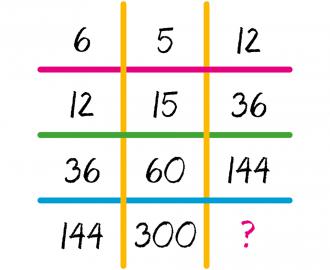
MATH PUZZLE: Can you replace...
[4041] MATH PUZZLE: Can you replace... - MATH PUZZLE: Can you replace the question mark with a number? - #brainteasers #math #riddles - Correct Answers: 2235 - The first user who solved this task is Djordje Timotijevic
BRAIN TEASERS
enter your answer and press button OK

MATH PUZZLE: Can you replace...

MATH PUZZLE: Can you replace the question mark with a number?
Correct answers: 2235
The first user who solved this task is Djordje Timotijevic.
#brainteasers #math #riddles
Register with your Google Account and start collecting points.
Check your ranking on list.

Dane Cook: Dropping Your Phone in Your Own Piss

Im in a new club, by the way. And I dont know if youre first timers like I am, but Im in the I Just Dropped My Cell Phone In My Own Piss Club. Have you done that? Yeah, good times. Im on the phone and I forget that Im using shoulder technique. Urinals were taken so I went in to use the regular john. And as Im standing there, mid-conversation, Im like Are you serious? and it just started to toboggan right down my powerful chest.
Jokes of the day - Daily updated jokes. New jokes every day.
Follow Brain Teasers on social networks

Brain Teasers

puzzles, riddles, mathematical problems, mastermind, cinemania...

Faraday discovers diamagnetism

In 1845, Michael Faraday, working in his laboratory at the Royal Institution, hung a piece of heavy glass between the poles of an electro-magnet and observed that the glass aligned itself across the lines of force of the magnet. He further experimented on many other substances, with similar results, a phenomena that he named diamagnetism. These investigations showed Faraday that magnetism was inherent within matter. This led to his lecture “Thoughts on Ray-vibrations”in April 1846, which he expanded in the following years into his field theory of electro-magnetism. This was the progenitor for mathematical descriptions formed by Thomson, and especially for the seminal work of James Clerk Maxwell.«
This site uses cookies to store information on your computer. Some are essential to help the site properly. Others give us insight into how the site is used and help us to optimize the user experience. See our privacy policy.