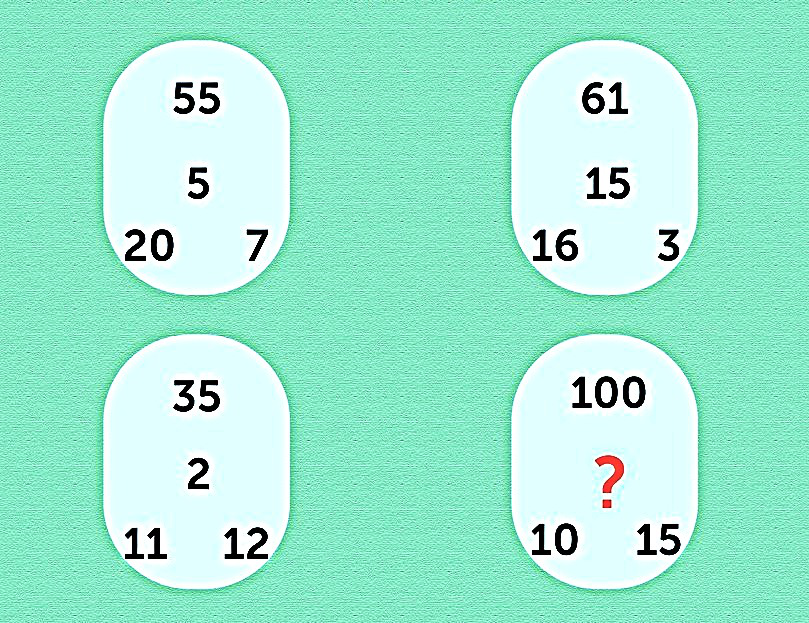
MATH PUZZLE: Can you replace...
MATH PUZZLE: Can you replace the question mark with a number?
Parrot wih an attitude...
A young man named John received a parrot as a gift. The parrot had a bad attitude and an even worse vocabulary. Every word out of this bird's mouth was rude, obnoxious and laced with profanity.
John tried and tried to change the bird's attitude by constantly saying polite words, playing soft music, and anything he could think of to set a good example. Nothing worked.
Finally, John got fed up and he yelled at the parrot. And, the bird yelled back. John shook the parrot, and the bird got angrier and ruder. Finally, in a moment of desperation, John put the bird in the refrigerator freezer.
For a few minutes, John heard the bird squawk and kick and scream... then suddenly there was quiet. Not a peep for over a minute. Fearing that he'd hurt the bird, John quickly opened the door to the freezer. The parrot calmly stepped out onto John's outstretched arm and said, "I believe I may have offended you with my rude language and actions. I am truly sorry, and I will do everything to correct my poor behavior."
John was astonished at the bird's change of attitude. As he was about to ask the parrot what had made such a dramatic change in his behavior, the bird continued,
"May I ask what the chicken did?"