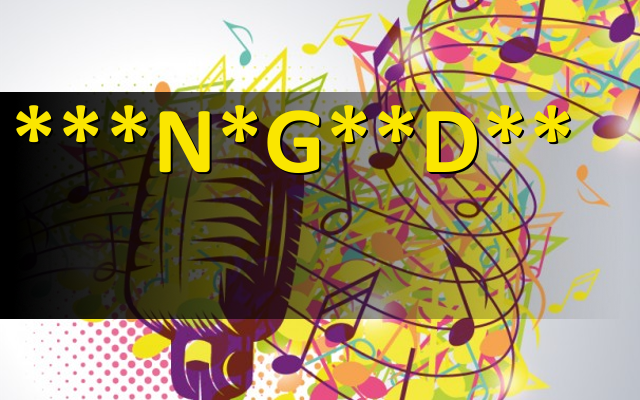
Replace asterisk symbols with ...
[5201] Replace asterisk symbols with ... - Replace asterisk symbols with a letters (***N*G**D**) and guess the name of musician band. Length of words in solution: 11. - #brainteasers #music - Correct Answers: 17 - The first user who solved this task is Djordje Timotijevic
BRAIN TEASERS
enter your answer and press button OK

Replace asterisk symbols with ...

Replace asterisk symbols with a letters (***N*G**D**) and guess the name of musician band. Length of words in solution: 11.
Correct answers: 17
The first user who solved this task is Djordje Timotijevic.
#brainteasers #music
Register with your Google Account and start collecting points.
Check your ranking on list.

First time

A pretty young blonde visiting her new doctor for the first time found herself alone in a small waiting room. She began undressing nervously, preparing herself for the upcoming examination. Just as she draped the last of her garments over the back of a chair, a light rap sounded on the door and a young doctor strode in.
Coming to an abrupt halt, the doctor looked his nude patient up and down carefully and with considerable appreciation.
"Miss Smith," he said finally, "it seems quite obvious to me that until today you have never undergone an eye examination."

Jokes of the day - Daily updated jokes. New jokes every day.
Follow Brain Teasers on social networks

Brain Teasers

puzzles, riddles, mathematical problems, mastermind, cinemania...

Josef Leopold Auenbrugger

Died 17 May 1809 at age 86 (born 19 Nov 1722). Austrian physician who devised the diagnostic technique of percussion (the art of striking a surface part of the body with short, sharp taps to diagnose the condition of the parts beneath the sound). With this technique, he could estimate the amount of fluid in a patient's chest and the size of his/her heart. (As a boy he had tapped the wine barrels in his father's cellar to find how full they were.) After seven years of investigation, he published the method in Inventum Novum (1761), though his technique did not gain recognition and acceptance until years after his death. When a translator republished the work in French (1808) the method gained acceptance around the world, and through time to the present as a fundamental diagnostic procedure.
This site uses cookies to store information on your computer. Some are essential to help the site properly. Others give us insight into how the site is used and help us to optimize the user experience. See our privacy policy.