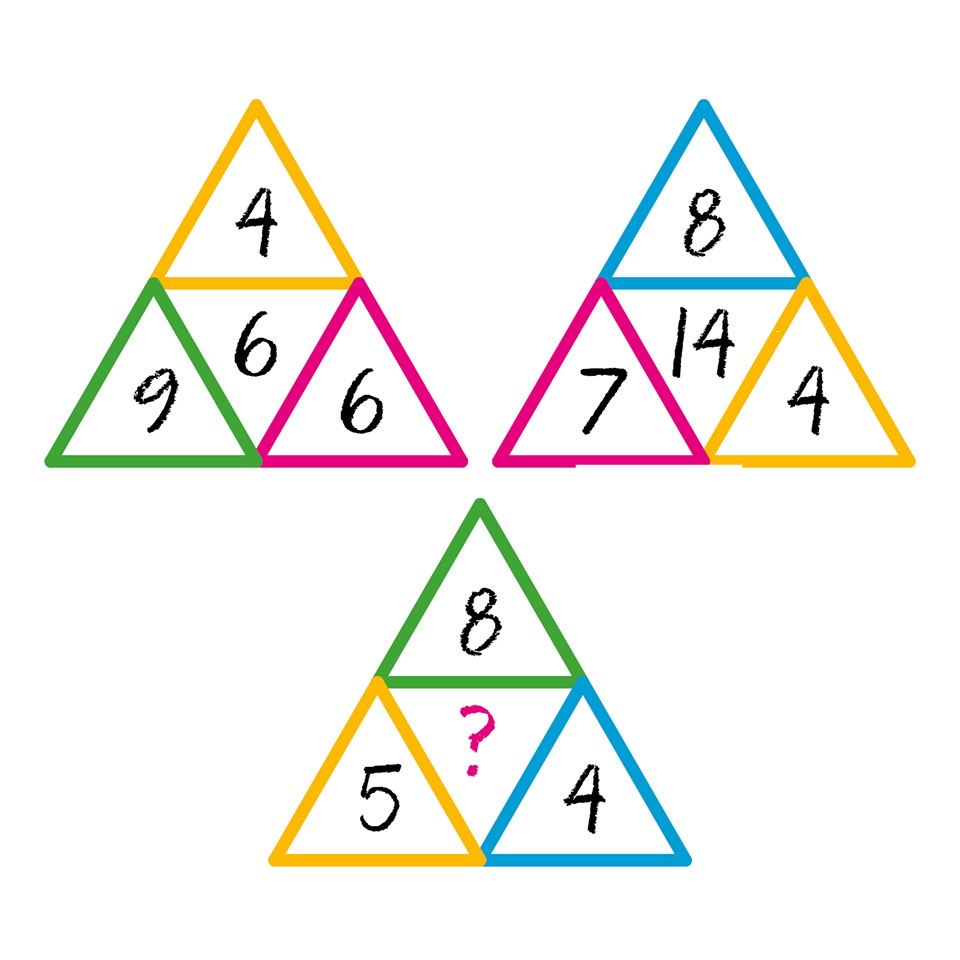
Replace the question mark with a number
[3173] Replace the question mark with a number - MATH PUZZLE: Can you replace the question mark with a number? - #brainteasers #math #riddles - Correct Answers: 566 - The first user who solved this task is Sanja Šabović
BRAIN TEASERS
enter your answer and press button OK

Replace the question mark with a number

MATH PUZZLE: Can you replace the question mark with a number?
Correct answers: 566
The first user who solved this task is Sanja Šabović.
#brainteasers #math #riddles
Register with your Google Account and start collecting points.
Check your ranking on list.

A man exploring the ancient Py...

A man exploring the ancient Pyramids of Egypt while on vacation stumbled across a secret room. He sneaked away from the tour group and explored the room. He found a dusty lamp and picked it up. While he wiped the dust off the lamp a genie appeared in a puff of smoke.
"For freeing me from my prison, I will grant you a wish, what will it be sire?"
The man thought for a moment, then said, "I want a spectacular job, a job that no man has ever succeeded at or has ever attempted to do."
"Allah Ka Zam!" said the genie. "You're a housewife!"
Jokes of the day - Daily updated jokes. New jokes every day.
Follow Brain Teasers on social networks

Brain Teasers

puzzles, riddles, mathematical problems, mastermind, cinemania...

Junction transistor

In 1951, the invention of the junction transistor was announced by Dr. William Shockley in Murray Hill, N.J. This new type of transistor overcame the problems of the earlier point-contact transistor. The junction transistor was a three-layer sandwich. The outer layers were semiconductors with too many electrons (known as N-type) and the inner layer was the opposite with too few (known as P-type).They weren't up to the point-contact transistor's ability to handle signals that fluctuated extremely rapidly, but in every other way they were superior. The NPN transistors were much more efficient, used very little power to work, and they were so much quieter that they could handle weaker signals than the type-A transistors ever could.
This site uses cookies to store information on your computer. Some are essential to help the site properly. Others give us insight into how the site is used and help us to optimize the user experience. See our privacy policy.