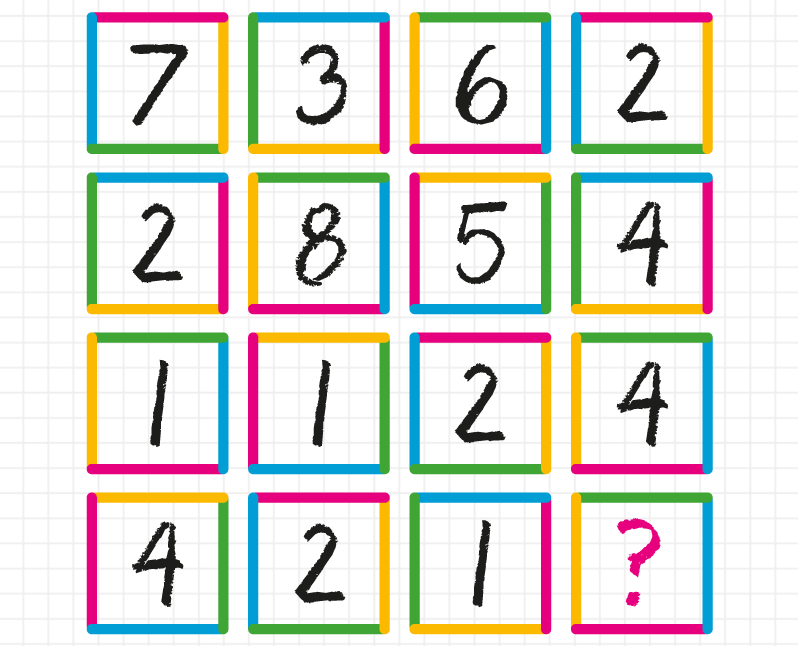
Replace the question mark with a number
MATH PUZZLE: Can you replace the question mark with a number?Correct answers: 419
The first user who solved this task is Fazil Hashim.
#brainteasers #math #riddles

A man went into a local tavern...
A man went into a local tavern and took a seat at the bar next to a women patron.
He turned to her and said, "This is a special day, I'm celebrating."
"What a coincidence," said the woman, "I'm celebrating, too". She clinked glasses with him and asked, "What are you celebrating?"
"I'm a chicken farmer," he replied. "For years all my hens were infertile, but today they're finally fertile."
"What a coincidence, the woman said. "My husband and I have been trying to have a child. Today, my gynecologist told me I'm pregnant! How did your chickens become fertile?" she asked.
"I switched cocks," he replied.
"What a coincidence," she said.
He turned to her and said, "This is a special day, I'm celebrating."
"What a coincidence," said the woman, "I'm celebrating, too". She clinked glasses with him and asked, "What are you celebrating?"
"I'm a chicken farmer," he replied. "For years all my hens were infertile, but today they're finally fertile."
"What a coincidence, the woman said. "My husband and I have been trying to have a child. Today, my gynecologist told me I'm pregnant! How did your chickens become fertile?" she asked.
"I switched cocks," he replied.
"What a coincidence," she said.