Take a look at the picture of ...
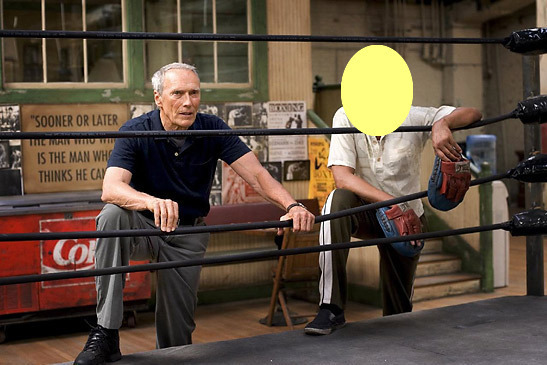
[3748] Take a look at the picture of ... - Take a look at the picture of the movie scene and guess the name of the person whose face is not visible. Length of words in solution: 6,7 - #brainteasers #movie #film #cinemania - Correct Answers: 32 - The first user who solved this task is On On Lunarbasil
BRAIN TEASERS
enter your answer and press button OK

Take a look at the picture of ...

Take a look at the picture of the movie scene and guess the name of the person whose face is not visible. Length of words in solution: 6,7
Correct answers: 32
The first user who solved this task is On On Lunarbasil.
#brainteasers #movie #film #cinemania
Register with your Google Account and start collecting points.
Check your ranking on list.

I get so drunk that I imagine things

The drunk was floundering down the alley carrying a box with holes on the side. He bumped into a friend who asked, "What do you have in there, pal?"

"A mongoose."

"What for?"

"Well, you know how drunk I can get. When I get drunk I see snakes, and I'm scared to death of snakes. That's why I got this mongoose, for protection."

"But," the friend said, "you idiot! Those are imaginary snakes."

"That's okay," said the drunk, showing his friend the interior of the box, "So is the mongoose."

Jokes of the day - Daily updated jokes. New jokes every day.
Follow Brain Teasers on social networks

Brain Teasers

puzzles, riddles, mathematical problems, mastermind, cinemania...

Sir Frank Macfarlane Burnet

Died 31 Aug 1985 at age 85 (born 3 Sep 1899). Sir Frank Macfarlane Burnet was an Australian physician, virologist, and recipient, with Sir Peter Medawar, of the 1960 Nobel Prize for Physiology or Medicine for the discovery of acquired immunological tolerance to tissue transplants. He studied the nature of antibody formation and immune processes and developed the notion of immunological tolerance to explain why humans do not form antibodies to their own bodily constituents. He also wrote about how mistakes of the immune system might cause obscure forms of blood, liver and kidney disease. He made pioneering use of fertile hen's eggs as hosts for virus multiplication. The concepts he developed are part of the basis for current theories about viruses as cancer-causing agents.
This site uses cookies to store information on your computer. Some are essential to help the site properly. Others give us insight into how the site is used and help us to optimize the user experience. See our privacy policy.