Take a look at the picture of ...
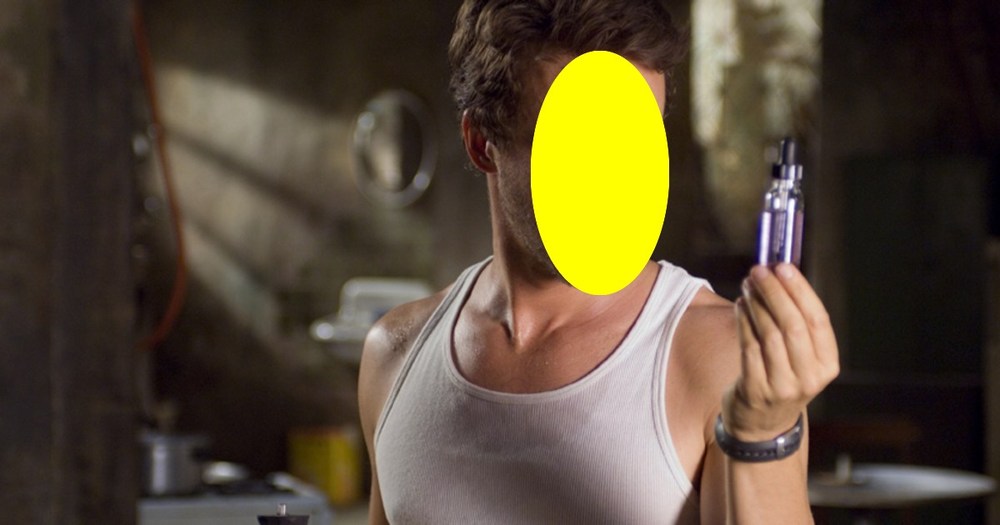
[4512] Take a look at the picture of ... - Take a look at the picture of the movie scene and guess the name of the person whose face is not visible. Length of words in solution: 6,6 - #brainteasers #movie #film #cinemania - Correct Answers: 26 - The first user who solved this task is Manguexa Wagle
BRAIN TEASERS
enter your answer and press button OK

Take a look at the picture of ...

Take a look at the picture of the movie scene and guess the name of the person whose face is not visible. Length of words in solution: 6,6
Correct answers: 26
The first user who solved this task is Manguexa Wagle.
#brainteasers #movie #film #cinemania
Register with your Google Account and start collecting points.
Check your ranking on list.

Visiting a clinic one day, Joe...

Visiting a clinic one day, Joe looked into the nurses eyes and said, "Nurses aren't supposed to laugh, right?"
"Of course I won't laugh. I'm a professional nurse. In over twenty years I've never laughed at a patient."
"Okay then," Joe said, and proceeded to drop his trousers, revealing the tiniest man penis the nurse had ever seen. Length and width, it couldn't have been bigger than a AAA battery.
Unable to control herself, the nurse started giggling then almost fell to the floor laughing.
A few minutes later she was able to regain her composure.
"I'm so sorry," said the nurse. "I don't know what came over me.
On my honor as a nurse and a lady, I promise it won't happen again. Now tell me, what seems to be the problem?"
"It's swollen," Joe replied.
Jokes of the day - Daily updated jokes. New jokes every day.
Follow Brain Teasers on social networks

Brain Teasers

puzzles, riddles, mathematical problems, mastermind, cinemania...

Frans Cornelis Donders

Born 27 May 1818; died 24 Mar 1889 at age 70.Franciscus Cornelis Donders was a Dutch ophthalmologist, the most eminent of 19th-century Dutch physicians, whose investigations of the physiology and pathology of the eye made possible a scientific approach to the correction of refractive disabilities such as nearsightedness, farsightedness, and astigmatism. He found (1858) that hypermetropia (farsightedness) is caused by a shortening of the eyeball, so that light rays refracted by the lens of the eye converge behind the retina. He discovered (1862) that the blurred vision of astigmatism is caused by uneven and unusual surfaces of the cornea and lens, which diffuse light rays instead of focusing them.
This site uses cookies to store information on your computer. Some are essential to help the site properly. Others give us insight into how the site is used and help us to optimize the user experience. See our privacy policy.