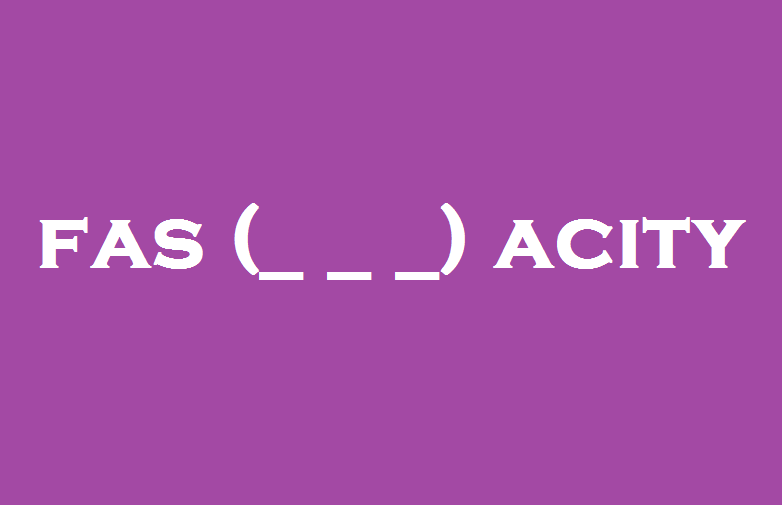
There are two incomplete wor...
[4617] There are two incomplete wor... - There are two incomplete words. Place three (3) letters in bracket so that you can complete the word on the left and begin the word on the right. - #brainteasers #wordpuzzles - Correct Answers: 45 - The first user who solved this task is FC Viñas
BRAIN TEASERS
enter your answer and press button OK

There are two incomplete wor...

There are two incomplete words. Place three (3) letters in bracket so that you can complete the word on the left and begin the word on the right.
Correct answers: 45
The first user who solved this task is FC Viñas.
#brainteasers #wordpuzzles
Register with your Google Account and start collecting points.
Check your ranking on list.

Wish granted???

A couple had been married for 35 years, and the pair was also celebrating their 60th birthdays. During the celebration, a fairy godmother appeared and said that because they had been such a loving couple all those years, she would give them each one wish.

The wife said she wanted to travel around the world. The fairy godmother waved her magic wand and BOOM! The wife had the tickets in her hand.

Then it was the husband's turn. He paused for a moment, then said boldly, "Well, I'd like to have a wife 30 years younger than I." The fairy godmother picked up her wand and BOOM! He was now 90.

Jokes of the day - Daily updated jokes. New jokes every day.
Follow Brain Teasers on social networks

Brain Teasers

puzzles, riddles, mathematical problems, mastermind, cinemania...

Scotland New Year law

In 1599, in Scotland, an ordinance was issued from Holyrood House that the 1st of January should thenceforth be accounted the first day of the year in Scotland. This replaced the centuries-old practice by which the civil new year was reckoned from 25 Mar (the Feast of the Annunciaton). Thus the Scottish year that began on 25 Mar 1599 ended on 31 Dec 1599 year, so that year had only 282 days. Since 1 Jan 1600, the Scottish New Year has been the same as modern useage. However, Scotland continued to use the Julian calendar until all Britain changed to the Gregorian calendar after 2 Sep 1752). England continued to use 25 Mar as the beginning of the new year for official purposes until 1752, and made the change to using 1 Jan at the same time as the adoption of the Gregorian calendar.«
This site uses cookies to store information on your computer. Some are essential to help the site properly. Others give us insight into how the site is used and help us to optimize the user experience. See our privacy policy.