
There are two incomplete wor...
[4861] There are two incomplete wor... - There are two incomplete words. Place three (3) letters in bracket so that you can complete the word on the left and begin the word on the right. - #brainteasers #wordpuzzles - Correct Answers: 50 - The first user who solved this task is Djordje Timotijevic
BRAIN TEASERS
enter your answer and press button OK

There are two incomplete wor...

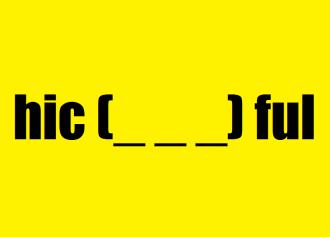
There are two incomplete words. Place three (3) letters in bracket so that you can complete the word on the left and begin the word on the right.
Correct answers: 50
The first user who solved this task is Djordje Timotijevic.
#brainteasers #wordpuzzles
Register with your Google Account and start collecting points.
Check your ranking on list.

8 short dad jokes to make you laugh

mom:Do you think we’re made of money?
daughter: Isn’t that what MOM stands for?

I wanted to get rid of my old knackered flat screen tv that doesn't work anymore.
The council said they would charge me £27.00 to collect it and dispose of it.
Instead, I paid £7.50 and booked an online courier to collect it and deliver to somebody I don't like!

In my last job my wages were paid in vegetables.
I left because i was unhappy with the celery.

It was a very moving ceremony.
Even the cake is in tiers.

So, today, I told my team about the importance of dried grapes.
It’s all about raisin awareness.

Yeah. I was in a Zoom meeting when I told that joke and they didn’t laugh either.
It turns out I’m not even remotely funny.

My mum told me that I can’t drive a car made of spaghetti.
You should have seen her face when I drove pasta.

Why are Catholics so upbeat after church gatherings?
Because they convert Mass into energy.

Jokes of the day - Daily updated jokes. New jokes every day.
Follow Brain Teasers on social networks

Brain Teasers

puzzles, riddles, mathematical problems, mastermind, cinemania...

Nevil Vincent Sidgwick

Died 15 Mar 1952 at age 78 (born 8 May 1873). English chemist who contributed to the understanding of chemical bonding, especially in coordination compounds. He worked on kinetics (studying the rates of isomerisation of triphenylmethane dye intermediates and the hydration of carboxylic anhydrides), thermodynamics (investigating phase equilibria and the solubility of organic acids and bases), as well as investigating the colour of copper complexes. During WW I, he set to work on a process for the production of acetone (propanone) from ethanol and other wartime projects, such as the production of phenol from benzene. His book, The Electronic Theory of Valency (1927) was a culmination of many years' interest in the nature of covalent and dative bonds.
This site uses cookies to store information on your computer. Some are essential to help the site properly. Others give us insight into how the site is used and help us to optimize the user experience. See our privacy policy.