What a winning combination?
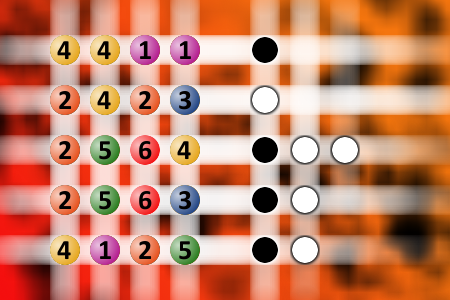
[6171] What a winning combination? - The computer chose a secret code (sequence of 4 digits from 1 to 6). Your goal is to find that code. Black circles indicate the number of hits on the right spot. White circles indicate the number of hits on the wrong spot. - #brainteasers #mastermind - Correct Answers: 22 - The first user who solved this task is Nasrin 24 T
BRAIN TEASERS
enter your answer and press button OK

What a winning combination?

The computer chose a secret code (sequence of 4 digits from 1 to 6). Your goal is to find that code. Black circles indicate the number of hits on the right spot. White circles indicate the number of hits on the wrong spot.
Correct answers: 22
The first user who solved this task is Nasrin 24 T.
#brainteasers #mastermind
Register with your Google Account and start collecting points.
Check your ranking on list.

The Sign

A boss was complaining in a staff meeting the other day that he wasn't getting any respect. Later that morning he went to a local sign shop and bought a small sign that read, "I'm the Boss". He then taped it to his office door.
Later that day when he returned from lunch, he found that someone had taped a note to the sign that said. "Your wife called, she wants her sign back!"       

Jokes of the day - Daily updated jokes. New jokes every day.
Follow Brain Teasers on social networks

Brain Teasers

puzzles, riddles, mathematical problems, mastermind, cinemania...

Solly Thorpe

Died 1 Apr 1993 at age 88 (born 30 May 1904).Solly Zuckerman Thorpe, Baron Zuckerman of Burnham was a British zoologist and political adviser was born in South Africa. After completing medical studies in England, his first career was teaching anatomy at University College London and doing research at London Zoo on primate behaviour (1928-32). When WW II began, he became a scientific adviser for the British Defense Ministry, beginning with experimental studies of concussion (the effects that bomb blast shock waves have on the body) and became a military strategist and government adviser (1939-46; 1960-66). He remained busy after retirement, as President of the Zoological Society of London, as a campaigner against the nuclear arms race, and as a promoter of environmental research.
This site uses cookies to store information on your computer. Some are essential to help the site properly. Others give us insight into how the site is used and help us to optimize the user experience. See our privacy policy.