What a winning combination?
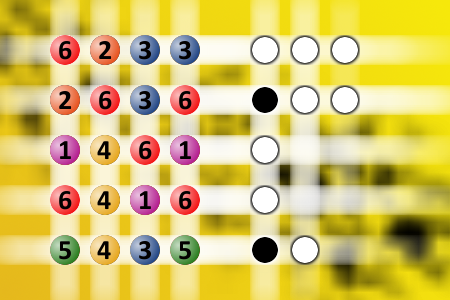
The computer chose a secret code (sequence of 4 digits from 1 to 6). Your goal is to find that code. Black circles indicate the number of hits on the right spot. White circles indicate the number of hits on the wrong spot.
Halloween, Thanksgiving and other Fall Jokes for kids
Halloween Jokes
1. Why did the cows turn into werewolves?
- It was a full moooooon.
2. Where do ghosts go on vacation?
- The boo-hamas.
3. What kind of monster loves disco?
- The boogieman.
4. How do you know a vampire has a cold?
- He starts coffin.
5. What do you call a werewolf with a fever?
- A hot dog.
6. Why are ghosts so bad at lying?
- You can see right through them.
Find more about Haloween on Haloween Jokes
Halloween Knock-Knock Jokes
1. Knock, knock.
- Who’s there?
- Jack.
- Jack who?
- Jack o’lantern.
2. Knock, knock.
- Who’s there?
- Ivan.
- Ivan who?
- Ivan to suck your blood.
3. Knock, knock.
- Who’s there?
- Witches.
- Witches who?
- Witches the best way out of this neighborhood?
Knock-Knock and other Haloween Jokes can be found on page Haloween Jokes
Pumpkin Jokes
1. How did the little pumpkins cross the road?
- With the help of a crossing gourd.
2. How do you fix a broken pumpkin?
- With a pumpkin patch.
3. How does the pumpkin listen to music?
- On vine-yl.
4. What do you call a pumpkin that works at the beach?
- A life gourd.
5. Where do pumpkins hold business meetings?
- In the gourd-room.
6. What happens if you eat too much pumpkin pie?
- You get autumn-y ache.
Pumpkins are importan part of many Haloween Jokes
Fall Jokes
1. What’s a scarecrow’s favorite fruit?
- Straw-berries.
2. What did the scarecrow say when he lost all his stuffing?
- That was the last straw!
3. What is the cutest of seasons?
- Awww-tumn.
4. What do you get when you drop a pumpkin?
- Squash.
5. Why did Humpty Dumpty have a great fall?
- To make up for his miserable summer.
6. Why are dads so good at fall puns?
- Because they’re so corny.
Thanksgiving Knock-Knock Jokes
1. Knock, knock.
- Who’s there?
- Annie.
- Annie who?
- Annie-body want some pie?
2. Knock, knock.
- Who’s there?
- Arthur.
- Arthur who?
- Arthur any leftovers?
3. Knock, knock.
- Who’s there?
- Pie.
- Pie who?
- Pie love you.
Knock-Knock and other Thanksgiving jokes on Thanksgiving Jokes
Thanksgiving Jokes
1. Why did the gravy get sent to bed early?
- For acting saucy at the table.
2. Why did the turkey get ejected from the basketball game?
- He committed a fowl.
3. Why couldn’t the Thanksgiving band perform?
- Somebody ate the drumsticks.
4. What do sweet potatoes wear to bed?
- Yammies.
5. What’s the key to a great Thanksgiving?
- The tur-key.
6. What is the most mythical vegetable?
- A uni-corn.
Find more jokes about Thanksgiving on Thanksgiving Jokes
Apple Jokes
1. Why did the apple stop in the middle of the road?
- It ran out of juice.
2. Why did the apple pie cross the road?
- It saw a fork up ahead.
3. Why did the apple join the circus?
- He loved the apple-ause.
4. Why did the apple pie cry?
- Its peelings were hurt.
5. What did the apple tree say to the hungry caterpillar?
- “Leaf me alone!”
6. Why is it hard to work at the apple pie factory?
- They have such a high turnover rate.