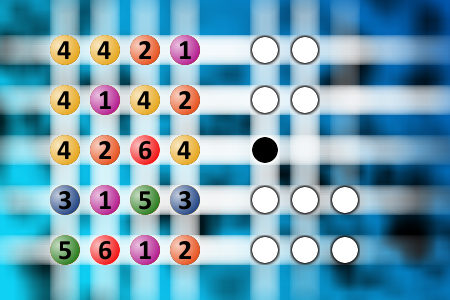
What a winning combination?
The computer chose a secret code (sequence of 4 digits from 1 to 6). Your goal is to find that code. Black circles indicate the number of hits on the right spot. White circles indicate the number of hits on the wrong spot.Correct answers: 22
The first user who solved this task is Nasrin 24 T.
#brainteasers #mastermind

A huge muscular man walks into...
A huge muscular man walks into a bar and orders a beer. The bartender can't help but stare at the guy because in contrast to his large muscles, the man has a head that is the size of an orange.
The bartender hands the guy his beer and says, "You know, I'm not gay but I want to compliment you on your physique, it really is phenomenal! But I have a question, why is your head so small?"
The big guy nods slowly. He's obviously fielded this question many times.
"One day," he begins, "I was hunting and got lost in the woods. I heard someone crying for help. I followed the cries and they led me to a frog that was sitting next to a stream."
"No s***?" says the bartender, thoroughly intrigued.
"Yeah, so I picked up the frog and it said, 'Kiss me. Kiss me and I will turn into a genie and grant you three wishes.'"
"Keep going!"
I looked around to make sure I was alone and gave the frog a kiss. POOF! The frog turned into a beautiful, voluptuous, naked woman.
She said, "You now have three wishes."
I looked down at my scrawny 115 pound body and said, "I want a body like Arnold Schwarzenneger." She nodded, snapped her fingers, and POOF there I was, so huge that I ripped out of my clothes and was standing there naked!
She then asked, "What will be your second wish?"
"What next?" begged the bartender.
I looked hungrily at her beautiful body and replied, "I want to make sensuous love with you here by this stream." She nodded, laid down, and beckoned to me. We made love right there by that stream for hours!
Afterwards, as we lay there next to each other, sweating from our glorious lovemaking, she whispered into my ear, "You know, you do have one more wish. What will it be?"
I looked at her and replied, "How 'bout a little head?"
The bartender hands the guy his beer and says, "You know, I'm not gay but I want to compliment you on your physique, it really is phenomenal! But I have a question, why is your head so small?"
The big guy nods slowly. He's obviously fielded this question many times.
"One day," he begins, "I was hunting and got lost in the woods. I heard someone crying for help. I followed the cries and they led me to a frog that was sitting next to a stream."
"No s***?" says the bartender, thoroughly intrigued.
"Yeah, so I picked up the frog and it said, 'Kiss me. Kiss me and I will turn into a genie and grant you three wishes.'"
"Keep going!"
I looked around to make sure I was alone and gave the frog a kiss. POOF! The frog turned into a beautiful, voluptuous, naked woman.
She said, "You now have three wishes."
I looked down at my scrawny 115 pound body and said, "I want a body like Arnold Schwarzenneger." She nodded, snapped her fingers, and POOF there I was, so huge that I ripped out of my clothes and was standing there naked!
She then asked, "What will be your second wish?"
"What next?" begged the bartender.
I looked hungrily at her beautiful body and replied, "I want to make sensuous love with you here by this stream." She nodded, laid down, and beckoned to me. We made love right there by that stream for hours!
Afterwards, as we lay there next to each other, sweating from our glorious lovemaking, she whispered into my ear, "You know, you do have one more wish. What will it be?"
I looked at her and replied, "How 'bout a little head?"