
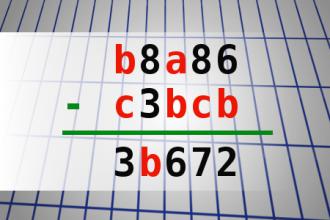
Find number abc
If b8a86 - c3bcb = 3b672 find number abc. Multiple solutions may exist.Correct answers: 23
The first user who solved this task is Nasrin 24 T.
#brainteasers #math

Mother Teresa's Heavenly Experience
When Mother Teresa died and went to heaven, God greeted her at the Pearly Gates.
"Be thou hungry, Mother Teresa?" asked God.
"I could eat," Mother Teresa replied.
So God opened a can of tuna and reached for a chunk of rye bread and they began to share it. While eating this humble meal, Mother Teresa looked down into Hell and saw the inhabitants devouring huge steaks, lobsters, pheasants, and pastries. Curious, but deeply trusting, she remained quiet.
The next day God again invited her to join him for a meal.
Again, it was tuna and rye bread. Once again, Mother Teresa could see the denizens of Hell enjoying lamb, turkey, venison, and delicious desserts. Still she said nothing.
The following day, mealtime arrived and another can of tuna was opened. She couldn't contain herself any longer.
Meekly, she asked, "God, I am grateful to be in heaven with you as a reward for the pious, obedient life I led. But here in heaven all I get to eat is tuna and a piece of rye bread and in the Other Place they eat like emperors and kings! I just don't understand it..."
God sighed. "Let's be honest Terry," he said, "For just two people, it doesn't pay to cook."
"Be thou hungry, Mother Teresa?" asked God.
"I could eat," Mother Teresa replied.
So God opened a can of tuna and reached for a chunk of rye bread and they began to share it. While eating this humble meal, Mother Teresa looked down into Hell and saw the inhabitants devouring huge steaks, lobsters, pheasants, and pastries. Curious, but deeply trusting, she remained quiet.
The next day God again invited her to join him for a meal.
Again, it was tuna and rye bread. Once again, Mother Teresa could see the denizens of Hell enjoying lamb, turkey, venison, and delicious desserts. Still she said nothing.
The following day, mealtime arrived and another can of tuna was opened. She couldn't contain herself any longer.
Meekly, she asked, "God, I am grateful to be in heaven with you as a reward for the pious, obedient life I led. But here in heaven all I get to eat is tuna and a piece of rye bread and in the Other Place they eat like emperors and kings! I just don't understand it..."
God sighed. "Let's be honest Terry," he said, "For just two people, it doesn't pay to cook."