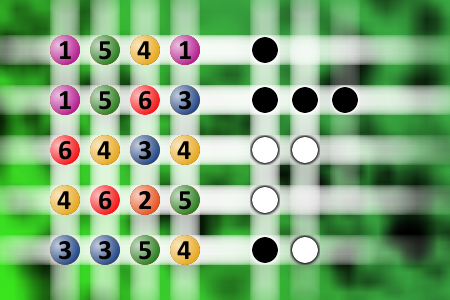
What a winning combination?
[8326] What a winning combination? - The computer chose a secret code (sequence of 4 digits from 1 to 6). Your goal is to find that code. Black circles indicate the number of hits on the right spot. White circles indicate the number of hits on the wrong spot. - #brainteasers #mastermind - Correct Answers: 1
BRAIN TEASERS
enter your answer and press button OK

What a winning combination?

The computer chose a secret code (sequence of 4 digits from 1 to 6). Your goal is to find that code. Black circles indicate the number of hits on the right spot. White circles indicate the number of hits on the wrong spot.
Correct answers: 1
#brainteasers #mastermind
Register with your Google Account and start collecting points.
Check your ranking on list.

People make time for who they want to

People make time for who they want to make time for. People text, call and reply to people they want to talk to. Never believe anyone who says they’re too busy. If they wanted to be around you, they would. ~ Author Unknown

Source: SimpleRemiders

Jokes of the day - Daily updated jokes. New jokes every day.
Follow Brain Teasers on social networks

Brain Teasers

puzzles, riddles, mathematical problems, mastermind, cinemania...

Thalidomide

In 1992, thalidomide was reported by Johns Hopkins medical researchers to improve the survival rate of patients who get bone-marrow transplants. The drug effectively fought graft-versus-host disease, the most common and dangerous complication. Such transplants are standard treatments for potentially fatal disorders including aplastic anemia and some blood cancers. Thalidomide was previously known for years as among the most effective treatments for leprosy. Yet, thalidomide had caused horrendous birth defects in thousands of babies in the 1950s and 60s. The same properties of the drug that arrested the development of babies are capable of arresting progression of many terrible diseases, and even reversing the effects of others.«[Image: present day thalidomide pills.] [Ref.: New England Journal of Medicine, Vol. 326, No.16, pp 1055-58.]
This site uses cookies to store information on your computer. Some are essential to help the site properly. Others give us insight into how the site is used and help us to optimize the user experience. See our privacy policy.