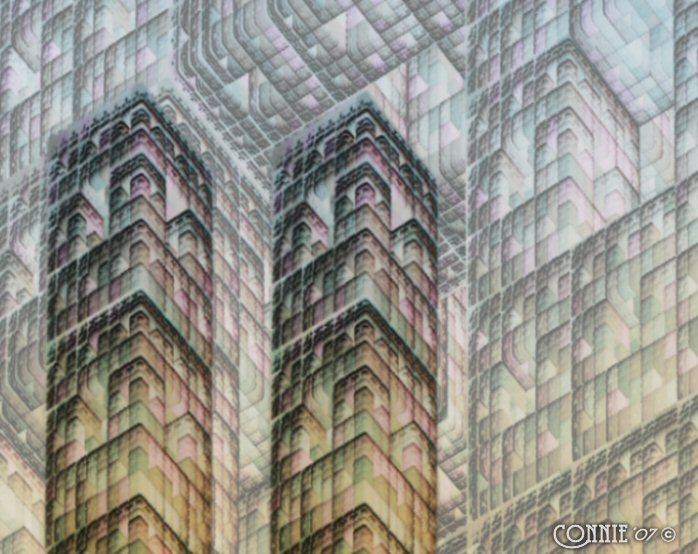
What hides this stereogram?
[6321] What hides this stereogram? - Stereogram - 3D Image - #brainteasers #stereogram #3Dimage
BRAIN TEASERS

What hides this stereogram?

Stereogram - 3D Image
#brainteasers #stereogram #3Dimage
Register with your Google Account and start collecting points.
Check your ranking on list.

The Police Academy

Three guys, a Polish guy, a Jewish guy and an Italian guy

sign up for the police academy. The Jewish guy goes in first

and the Captain says to him, "We have to ask you one question

before we admit you in to the academy, Who killed Jesus?"

The Jewish guy says "The Romans did it."

The Captain says, "Right, you're admitted."

The Italian guy goes in next. The Captain asks him the same

thing. "We have to ask you one question first before you're

admitted to the Police Academy. Who killed Jesus?"

The Italian guy says "The Romans did it."

The Captain says, "Right, you're admitted."

The Polish guy goes in and the Captain repeats the question.

The Polish guy says "Gee, I don't know." The Captain tells

him to go home and think about it for a week and come back

and tell him.

The Polish guy goes home and his wife asked him how his

first day went at the academy, and he says to her, "You won't

believe it! My first day on the job and they assigned me to

a murder case!"

Jokes of the day - Daily updated jokes. New jokes every day.
Follow Brain Teasers on social networks

Brain Teasers

puzzles, riddles, mathematical problems, mastermind, cinemania...

António Egas Moniz

Died 13 Dec 1955 at age 81 (born 29 Nov 1874).Portuguese neurologist and statesman who was the founder of modern psychosurgery. In the 1920s, he pioneered the technique of cerebral angiography, enabling X-ray examination of arteries in the brain. In the 1930s, he developed the original form of prefrontal leucotomy (lobotomy), an operation for relieving severe symptoms of psychiatric illness. The operation consisted of inserting a sharp knife into the prefrontal lobe of the brain, roughly the area above and between the eyes; it required the minimum of equipment and lasted less than five minutes. For this development, he was awarded a share of the 1949 Nobel Prize for Physiology or Medicine with Walter Hess.
This site uses cookies to store information on your computer. Some are essential to help the site properly. Others give us insight into how the site is used and help us to optimize the user experience. See our privacy policy.