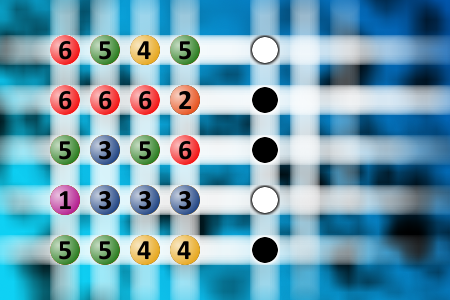
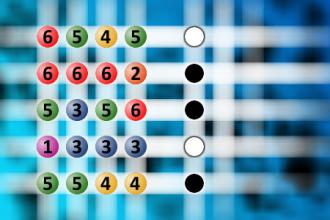
Which is a winning combination of digits?
The computer chose a secret code (sequence of 4 digits from 1 to 6). Your goal is to find that code. Black circles indicate the number of hits on the right spot. White circles indicate the number of hits on the wrong spot.Correct answers: 33
The first user who solved this task is Djordje Timotijevic.
#brainteasers #mastermind

One Monday morning a mailman i...
One Monday morning a mailman is walking the neighborhood on his usual route. As he approaches one of the homes he noticed that both cars were in the driveway. His wonder was cut short by Bob, the homeowner, coming out with a load of empty beer and liquor bottles. "Wow Bob, looks like you guys had one hell of a party last night." the mailman comments.
Bob in obvious pain replies, "Actually we had it Saturday night. This is the first I have felt like moving since 4:00 am Sunday morning. We had about fifteen couples from around the neighborhood over for Christmas Cheer and it got a bit wild. Hell, we got so drunk around midnight that we started playing WHO AM I."
The mailman thinks a moment and says, "How do you play that?"
Well all the guys go in the bedroom and we come out one at a time with a sheet covering us and only our "privates" showing through a hole in the sheet. Then the women try to guess who it is."
The mailman laughs and says, "Damn, I'm sorry I missed that."
Probably a good thing you did," Bob responds. "Your name came up four or five times."
Bob in obvious pain replies, "Actually we had it Saturday night. This is the first I have felt like moving since 4:00 am Sunday morning. We had about fifteen couples from around the neighborhood over for Christmas Cheer and it got a bit wild. Hell, we got so drunk around midnight that we started playing WHO AM I."
The mailman thinks a moment and says, "How do you play that?"
Well all the guys go in the bedroom and we come out one at a time with a sheet covering us and only our "privates" showing through a hole in the sheet. Then the women try to guess who it is."
The mailman laughs and says, "Damn, I'm sorry I missed that."
Probably a good thing you did," Bob responds. "Your name came up four or five times."