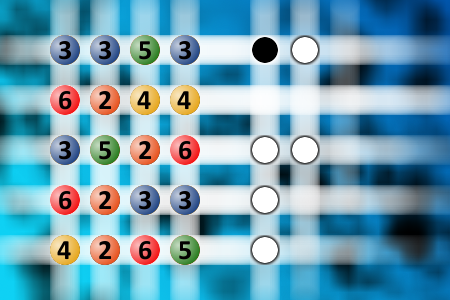
Which is a winning combination of digits?
The computer chose a secret code (sequence of 4 digits from 1 to 6). Your goal is to find that code. Black circles indicate the number of hits on the right spot. White circles indicate the number of hits on the wrong spot.Correct answers: 0
#brainteasers #mastermind

A man was walking along a Cali...
A man was walking along a California beach and stumbled across an old lamp.
He picked it up and rubbed it and out popped a genie. The genie said "OK, OK. You released me from the lamp, blah blah blah. This is the fourth time this month and I'm getting a little sick of these wishes so you can forget about three. You only get one wish!"
The man sat and thought about it for a while and said, "I've always wanted to go to Hawaii but I'm scared to fly and I get very seasick. Could you build me a bridge to Hawaii so I can drive my car there?"
The genie laughed , "That's impossible. Think of the logistics of that! How would the supports ever reach the bottom of the Pacific? Think of how much concrete-how much steel! And the maintenance of that bridge! No - think of another wish."
The man said OK and tried to think of a really good wish.
Finally, he said, "I'm married to a redhead. So, I wish that I could understand her... know how she feels inside and what she's thinking when she gives me the silent treatment...... know what she really wants when she says 'nothing'... know how to make her truly happy......I want to know how she can be so damn sexy one second and be the devils daughter, the next. I really want to understand her and how she thinks!"
The genie said, "You want that bridge with two lanes or four?"
He picked it up and rubbed it and out popped a genie. The genie said "OK, OK. You released me from the lamp, blah blah blah. This is the fourth time this month and I'm getting a little sick of these wishes so you can forget about three. You only get one wish!"
The man sat and thought about it for a while and said, "I've always wanted to go to Hawaii but I'm scared to fly and I get very seasick. Could you build me a bridge to Hawaii so I can drive my car there?"
The genie laughed , "That's impossible. Think of the logistics of that! How would the supports ever reach the bottom of the Pacific? Think of how much concrete-how much steel! And the maintenance of that bridge! No - think of another wish."
The man said OK and tried to think of a really good wish.
Finally, he said, "I'm married to a redhead. So, I wish that I could understand her... know how she feels inside and what she's thinking when she gives me the silent treatment...... know what she really wants when she says 'nothing'... know how to make her truly happy......I want to know how she can be so damn sexy one second and be the devils daughter, the next. I really want to understand her and how she thinks!"
The genie said, "You want that bridge with two lanes or four?"