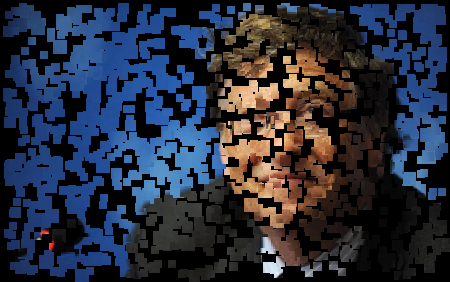
Who is the mysterious person i...
[3342] Who is the mysterious person i... - Who is the mysterious person in the picture? - #brainteasers #riddles - Correct Answers: 40 - The first user who solved this task is On On Lunarbasil
BRAIN TEASERS
enter your answer and press button OK

Who is the mysterious person i...

Who is the mysterious person in the picture?
Correct answers: 40
The first user who solved this task is On On Lunarbasil.
#brainteasers #riddles
Register with your Google Account and start collecting points.
Check your ranking on list.

Cannibals

One day three people were stuck on an island with cannibals.

The cannibals said, "If you do what we say, we won’t kill you".

So the 3 people followed the orders which were to go into the forest and pick 10 fruits of your choice.

So the first person came back out of the forest with 10 apples. The cannibals said, "put the apples up your ass without making a facial expression". The person held his composure however then made a facial expression after the second apple, so the cannibals killed him.

The second person came back out of the forest with 10 cherries. The cannibals said, "put the cherries up your ass without making a facial expression". However as much as he tried to restrain himself the person burst into tears laughing on the tenth cherry, so they killed him.

In heaven, the person with apples asked the person with cherries "why did you start laughing?"

The person replied, "I saw the third person come out with pineapples."

Jokes of the day - Daily updated jokes. New jokes every day.
Follow Brain Teasers on social networks

Brain Teasers

puzzles, riddles, mathematical problems, mastermind, cinemania...

Prince Louis-Victor de Broglie

Born 15 Aug 1892; died 19 Mar 1987 at age 94. Louis Victor Pierre Raymond duc de Broglie was a French physicist best known for his research on quantum theory and for his discovery of the wave nature of electrons. De Broglie was of the French aristocracy - hence the title “duc”(Prince). In 1923, as part of his Ph.D. thesis, he argued that since light could be seen to behave under some conditions as particles (photoelectric effect) and other times as waves (diffraction), we should consider that matter has the same ambiguity of possessing both particle and wave properties. For this, he was awarded the 1929 Nobel Prize for Physics.
This site uses cookies to store information on your computer. Some are essential to help the site properly. Others give us insight into how the site is used and help us to optimize the user experience. See our privacy policy.