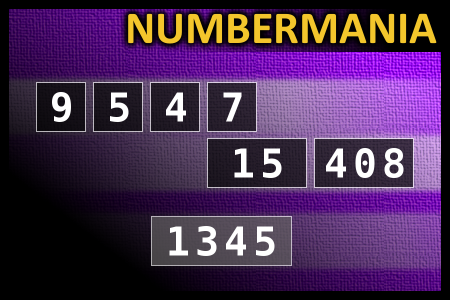
Calculate the number 1345
[1588] Calculate the number 1345 - NUMBERMANIA: Calculate the number 1345 using numbers [9, 5, 4, 7, 15, 408] and basic arithmetic operations (+, -, *, /). Each of the numbers can be used only once. - #brainteasers #math #numbermania - Correct Answers: 23 - The first user who solved this task is Sanja Šabović
BRAIN TEASERS
enter your answer and press button OK

Calculate the number 1345

NUMBERMANIA: Calculate the number 1345 using numbers [9, 5, 4, 7, 15, 408] and basic arithmetic operations (+, -, *, /). Each of the numbers can be used only once.
Correct answers: 23
The first user who solved this task is Sanja Šabović.
#brainteasers #math #numbermania
Register with your Google Account and start collecting points.
Check your ranking on list.

To Do List

When I returned home from college for a break, I noticed a paper posted on the refrigerator. It listed some goals my dad had set for himself: Help wife more; lose weight; be more productive at work.

I promptly added: “Send Michelle money every month.”

A few days later my brother wrote: “Make payments on car for Jason.”

Then my boyfriend joined in with: “Buy Tom a Jeep.”

Finally my father added a new goal to his amended list: “Wean kids.”

Jokes of the day - Daily updated jokes. New jokes every day.
Follow Brain Teasers on social networks

Brain Teasers

puzzles, riddles, mathematical problems, mastermind, cinemania...

U.S. daylight saving time

In 1918, the U.S. first began daylight saving time (DST) on Easter Sunday, when clocks were set ahead by one hour. The idea was sponsored by the Daylight Savings Association. N.Y. Senator William M. Calder introduced the bill to Congress on 17 Apr 1917. It was initially defeated, but subsequently passed by roll-call on 27 Jun 1917. In recent years in the U.S., up to 2006, clocks were changed at 2 a.m. on the first Sunday in April, and reverted on the last Sunday of October. Effective in 2007, DST is set by Congress to begin on the second Sunday of March and end the first Sunday of November. The concept had already been introduced in Great Britain as a fuel-saving measure during wartime, in order to conserve coal stocks during WW I.* [Image: Poster displayed in New Haven Railroad stations, 1941]
This site uses cookies to store information on your computer. Some are essential to help the site properly. Others give us insight into how the site is used and help us to optimize the user experience. See our privacy policy.