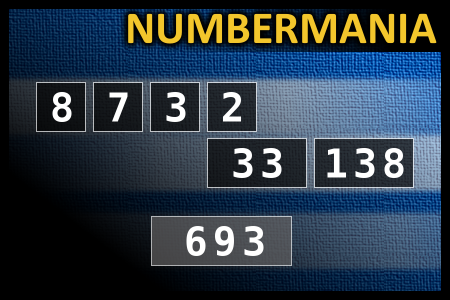
Calculate the number 693
[754] Calculate the number 693 - NUMBERMANIA: Calculate the number 693 using numbers [8, 7, 3, 2, 33, 138] and basic arithmetic operations (+, -, *, /). Each of the numbers can be used only once. - #brainteasers #math #numbermania - Correct Answers: 33 - The first user who solved this task is Sanja Šabović
BRAIN TEASERS
enter your answer and press button OK

Calculate the number 693

NUMBERMANIA: Calculate the number 693 using numbers [8, 7, 3, 2, 33, 138] and basic arithmetic operations (+, -, *, /). Each of the numbers can be used only once.
Correct answers: 33
The first user who solved this task is Sanja Šabović.
#brainteasers #math #numbermania
Register with your Google Account and start collecting points.
Check your ranking on list.

50/50

A young man watched as an elderly couple sat down to lunch at McDonald's. He noticed that they had ordered just one meal, and an extra drink cup. As he watched, the old gentleman carefully divided the hamburger in half, then counted out the fries, one for him, one for her, etc, until each had exactly half.

Then the old man poured half of the soft drink into the extra cup and set that in front of his wife. The old man then began to eat, but his wife just sat watching him.

The young man felt sorry for them and asked "I'm sorry to intrude, but would you allow me to purchase another meal for your wife so that you don't have to split your food?"

The old gentleman said, "Oh, no, thank you. But you see, we've been married a long time, and everything has always been shared, 50/50."

The young man said, "Wow! That's commendable." He then turned to the wife and asked, "Aren't you going to eat your share?"

The wife replied "Not yet. It's his turn to use the teeth."

Jokes of the day - Daily updated jokes. New jokes every day.
Follow Brain Teasers on social networks

Brain Teasers

puzzles, riddles, mathematical problems, mastermind, cinemania...

Edwin Ray Guthrie

Born 9 Jan 1886; died 23 Apr 1959 at age 73.American psychologist whose work dealt with the psychology of learning and the role association plays. In his Law of Contiguity, he held that “a combination of stimuli which has accompanied a movement, will on its recurrence tend to be followed by that movement.” He said that all learning is based on a stimulus- response association. Movements are small stimulus- response combinations. These movements make up an act. A learned behavior is a series of movements. It takes time for the movements to develop into an act. He believed that learning is incremental. Some behavior involves repetition of movements and what is learned are movements, not behaviors.
This site uses cookies to store information on your computer. Some are essential to help the site properly. Others give us insight into how the site is used and help us to optimize the user experience. See our privacy policy.