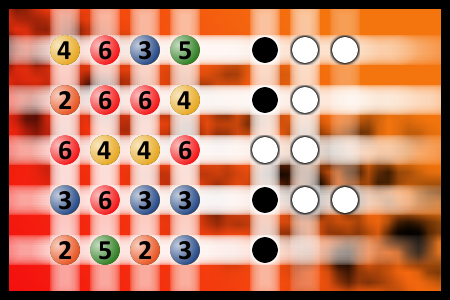
What a winning combination?
The computer chose a secret code (sequence of 4 digits from 1 to 6). Your goal is to find that code. Black circles indicate the number of hits on the right spot. White circles indicate the number of hits on the wrong spot.Correct answers: 61
The first user who solved this task is Sanja Šabović.
#brainteasers #mastermind

The only way to pull off a Sun...
The only way to pull off a Sunday afternoon quickie with their 8-year-old son in the apartment was to send him out on the balcony with a popsicle and tell him to report on all the neighborhood activities.He began his commentary as his parents put their plan into operation.
"There's a car being towed from the parking lot," he shouted.A few moments passed.
"An ambulance just drove by."
A few moments later, "Looks like the Anderson's have company," he called out."Matt's riding a new bike."
A few moments later, "Looks like the Sanders are moving.""Jason is on his skate board."
A few more moments, "The Coopers are having sex."
Startled, his mother and dad shot up in bed. Dad cautiously called out, "How do you know they are having sex?"
"Jimmy Cooper is standing on his balcony with a popsicle too."
"There's a car being towed from the parking lot," he shouted.A few moments passed.
"An ambulance just drove by."
A few moments later, "Looks like the Anderson's have company," he called out."Matt's riding a new bike."
A few moments later, "Looks like the Sanders are moving.""Jason is on his skate board."
A few more moments, "The Coopers are having sex."
Startled, his mother and dad shot up in bed. Dad cautiously called out, "How do you know they are having sex?"
"Jimmy Cooper is standing on his balcony with a popsicle too."