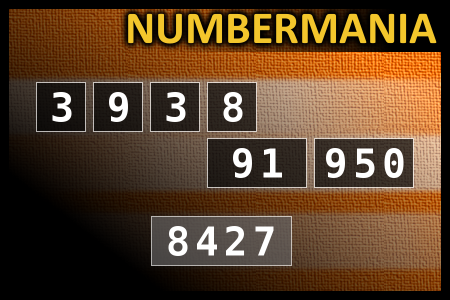
Calculate the number 8427
[1263] Calculate the number 8427 - NUMBERMANIA: Calculate the number 8427 using numbers [3, 9, 3, 8, 91, 950] and basic arithmetic operations (+, -, *, /). Each of the numbers can be used only once. - #brainteasers #math #numbermania - Correct Answers: 29 - The first user who solved this task is Sanja Šabović
BRAIN TEASERS
enter your answer and press button OK

Calculate the number 8427

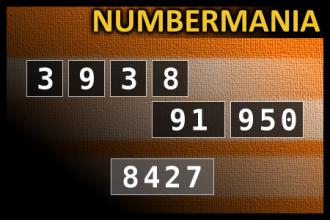
NUMBERMANIA: Calculate the number 8427 using numbers [3, 9, 3, 8, 91, 950] and basic arithmetic operations (+, -, *, /). Each of the numbers can be used only once.
Correct answers: 29
The first user who solved this task is Sanja Šabović.
#brainteasers #math #numbermania
Register with your Google Account and start collecting points.
Check your ranking on list.

A professor of chemistry wante...

A professor of chemistry wanted to teach his 5th grade class a lesson about the evils of alcohol, so he produced an experiment that involved a glass of water, a glass of whiskey and two worms."Now, class. Observe closely the worms," said the professor putting a worm first into the water. The worm in the water writhed about, happy as a worm in water could be.
The second worm, he put into the whiskey. It writhed painfully, and quickly sank to the bottom, dead as a doornail.
"Now, what lesson can we derive from this experiment?" the professor asked.
Little Johnny, who naturally sits in back, raised his hand and wisely, responded...
"Drink whiskey and you won't get worms!"
Jokes of the day - Daily updated jokes. New jokes every day.
Follow Brain Teasers on social networks

Brain Teasers

puzzles, riddles, mathematical problems, mastermind, cinemania...

Nehemiah Grew

Baptized 26 Sep 1641; died 25 Mar 1712 at age 70. English botanist, physician, and microscopist, who was one of the founders of the science of plant anatomy. He began observations on the anatomy of plants in 1664, and his first essay on the subject, The Anatomy of Vegetables Begun was presented to the Royal Society of London in 1670 (published 1672). He took a particular interest in determining the physiological nature of the tissues. He observed the pourous structure of plant tissue, suggested that flowers have a sexual function, and was first to use the term "comparative anatomy" (1676, in a lecture at the Royal Society). His extensive studies of plant tissues, including roots, trunks, leaves, flowers, fruits and seeds were published in a major work The Anatomy of Plants (1682). From a chemical analysis of water from springs at Epsom, Surrey, he isolated magnesium sulphate, which remains known as "Epsom Salts."
This site uses cookies to store information on your computer. Some are essential to help the site properly. Others give us insight into how the site is used and help us to optimize the user experience. See our privacy policy.