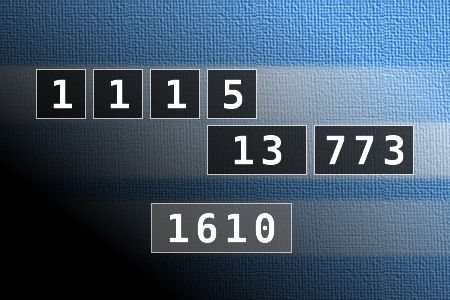
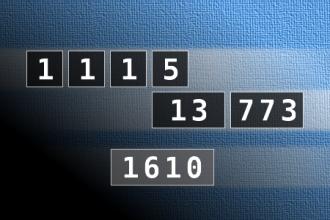
Calculate the number 1610
NUMBERMANIA: Calculate the number 1610 using numbers [1, 1, 1, 5, 13, 773] and basic arithmetic operations (+, -, *, /). Each of the numbers can be used only once.Correct answers: 2
#brainteasers #math #numbermania

A Hundred Dollar a Night
The agent for a beautiful actress discovered one day that she had been selling her body at a hundred dollars a night The agent, who had long lusted for her, hadn't dreamed that she had been so easily obtainable. He approached her, told her how much she turned him on and how much he wanted to make it with her.
She agreed to spend the night with him, but said he would have to pay her the same hundred dollars that the other customers did. He scratched his head, considered it, and then asked, "Don't I even get my agent's ten percent as a deduction?"
"No siree," she said. "If you want it, you're going to have to pay full price for it, just like the other Johns."
The agent didn't like that at all, but he agreed. That night, she came to his apartment after her performance at a local night club. The agent screwed her at midnight, after turning out all the lights.
At 1 A.M., she was awakened again. Again she was vigorously screwed. In a little while, she was awakened again, and again she was screwed. The actress was impressed with her lover's vitality.
"My God," she whispered in the dark, "you are virile. I never realized how lucky I was to have you for my agent."
"I'm not your agent, lady," a strange voice answered. "He's at the door taking tickets "
She agreed to spend the night with him, but said he would have to pay her the same hundred dollars that the other customers did. He scratched his head, considered it, and then asked, "Don't I even get my agent's ten percent as a deduction?"
"No siree," she said. "If you want it, you're going to have to pay full price for it, just like the other Johns."
The agent didn't like that at all, but he agreed. That night, she came to his apartment after her performance at a local night club. The agent screwed her at midnight, after turning out all the lights.
At 1 A.M., she was awakened again. Again she was vigorously screwed. In a little while, she was awakened again, and again she was screwed. The actress was impressed with her lover's vitality.
"My God," she whispered in the dark, "you are virile. I never realized how lucky I was to have you for my agent."
"I'm not your agent, lady," a strange voice answered. "He's at the door taking tickets "