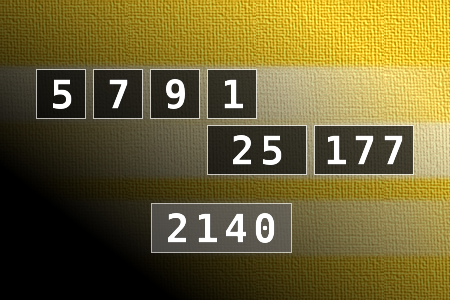
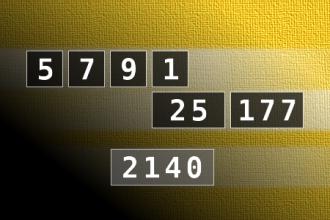
Calculate the number 2140
NUMBERMANIA: Calculate the number 2140 using numbers [5, 7, 9, 1, 25, 177] and basic arithmetic operations (+, -, *, /). Each of the numbers can be used only once.Correct answers: 41
The first user who solved this task is Sanja Šabović.
#brainteasers #math #numbermania

Build Me a Bridge
A man walking along a California beach was deep in prayer. Suddenly the sky clouded above his head and, in a booming voice, the Lord said, "Because you have TRIED to be faithful to me in all ways, I will grant you one wish."
The man said, "Build a bridge to Hawaii so I can drive over anytime I want."The Lord said, "Your request is very materialistic. Think of the enormous challenges for that kind of undertaking. The supports required to reach the bottom of the Pacific! The concrete and steel it would take! It will nearly exhaust several natural resources. I can do it, but it is hard for me to justify your desire for worldly things. Take a little more time and think of something that would honor and glorify me."
The man thought about it for a long time. Finally he said, "Lord, I wish that I could understand my wife. I want to know how she feels inside, what she's thinking when she gives me the silent treatment, why she cries, what she means when she says ‘nothing's wrong,’ and how I can make a woman truly happy."
The Lord replied, "You want two lanes or four on that bridge?"
The man said, "Build a bridge to Hawaii so I can drive over anytime I want."The Lord said, "Your request is very materialistic. Think of the enormous challenges for that kind of undertaking. The supports required to reach the bottom of the Pacific! The concrete and steel it would take! It will nearly exhaust several natural resources. I can do it, but it is hard for me to justify your desire for worldly things. Take a little more time and think of something that would honor and glorify me."
The man thought about it for a long time. Finally he said, "Lord, I wish that I could understand my wife. I want to know how she feels inside, what she's thinking when she gives me the silent treatment, why she cries, what she means when she says ‘nothing's wrong,’ and how I can make a woman truly happy."
The Lord replied, "You want two lanes or four on that bridge?"