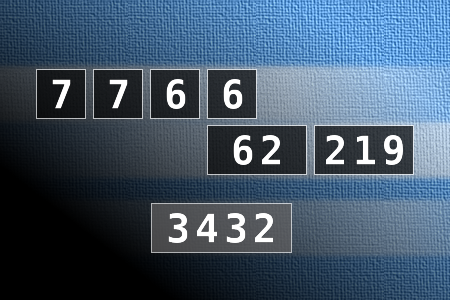
Calculate the number 3432
NUMBERMANIA: Calculate the number 3432 using numbers [7, 7, 6, 6, 62, 219] and basic arithmetic operations (+, -, *, /). Each of the numbers can be used only once.Correct answers: 25
The first user who solved this task is Thinh Ddh.
#brainteasers #math #numbermania

I'm not saying let's go kill...
I'm not saying let's go kill all the stupid people. I'm just saying let's remove all the warning labels and let the problem work itself out.
-------------------------------------------------
I changed my car horn to gunshot sounds. People move out of the way much faster now.
-----------------------------------------------------
You can tell a lot about a woman's mood just looking at her hands. If they are holding a gun, she's probably angry.
-----------------------------------------------
Gone are the days when girls used to cook like their mothers. Now they drink like their fathers.
--------------------------------------------------------
You know that tingly little feeling you get when you really like someone? That's common sense leaving your body.
------------------------------------------------------------
I don't like making plans for the day because then the word "premeditated" get's thrown around in the courtroom.
---------------------------------------------------
I didn't make it to the gym today. That makes five years in a row
-------------------------------------------------------
I decided to change calling the bathroom the John and renamed it the Jim.
I feel so much better saying I went to the Jim this morning
-------------------------------------------------------------
Dear paranoid people who check behind shower curtains for murderers; if you find one, what's your plan?
-------------------------------------------------
I changed my car horn to gunshot sounds. People move out of the way much faster now.
-----------------------------------------------------
You can tell a lot about a woman's mood just looking at her hands. If they are holding a gun, she's probably angry.
-----------------------------------------------
Gone are the days when girls used to cook like their mothers. Now they drink like their fathers.
--------------------------------------------------------
You know that tingly little feeling you get when you really like someone? That's common sense leaving your body.
------------------------------------------------------------
I don't like making plans for the day because then the word "premeditated" get's thrown around in the courtroom.
---------------------------------------------------
I didn't make it to the gym today. That makes five years in a row
-------------------------------------------------------
I decided to change calling the bathroom the John and renamed it the Jim.
I feel so much better saying I went to the Jim this morning
-------------------------------------------------------------
Dear paranoid people who check behind shower curtains for murderers; if you find one, what's your plan?