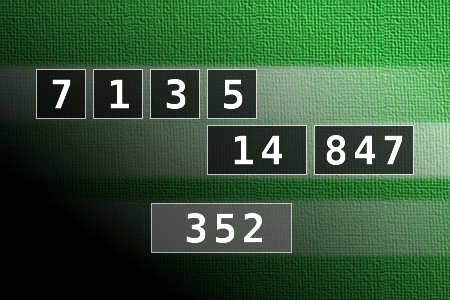

Calculate the number 352
NUMBERMANIA: Calculate the number 352 using numbers [7, 1, 3, 5, 14, 847] and basic arithmetic operations (+, -, *, /). Each of the numbers can be used only once.Correct answers: 0
#brainteasers #math #numbermania

A woman goes to Spain to atten...
A woman goes to Spain to attend a 2-week, company training session. Her husband drives her to the airport and wishes her to have a good trip.
The wife answers: "Thank you honey, what would you like me to bring for you?"
The husband laughs and says: "A Spanish girl!"
The woman kept quiet and left.
Two weeks later he picks her up in the airport and asks:
"So, honey, how was the trip?"
"Very good, thank you."
"And, what happened to my present?"
"Which present?" She asked.
"The one I asked for - a Spanish girl!!"
"Oh, that," she said "Well, I did what I could; now we'll have to wait for a few months to see if it is a boy or a girl!"