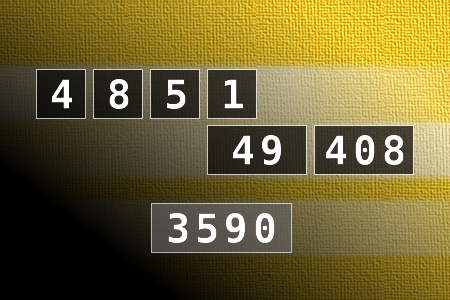

Calculate the number 3590
NUMBERMANIA: Calculate the number 3590 using numbers [4, 8, 5, 1, 49, 408] and basic arithmetic operations (+, -, *, /). Each of the numbers can be used only once.Correct answers: 36
The first user who solved this task is Djordje Timotijevic.
#brainteasers #math #numbermania

A guy went to his doctor full...
A guy went to his doctor full of anger. "Doc," he said, "I feel like killing my wife. You've got to help me. Please tell me what I should do."
The doctor thought for a moment. "Look," he said, "here are some pills. Take these twice a day and they'll allow you to have sex with your wife six time a day. If you do this for thirty days, you'll finally screw her to death. And the autopsy will just show that she died of heart failure during sex."
"Wonderful, doc," said the grateful patient. "I'll start with this right away."
He left with the bottle of pills and a smile on his face. Nearly a month passed. One day, while on a medical convention, the doctor passed by the patient coming down the sidewalk in a wheelchair, just barely managing to move forward.
"What happened?" asked the doctor. "What happened to your wife?"
"Don't worry, doc," the patient reassured him, "two more days and she'll be dead."
The doctor thought for a moment. "Look," he said, "here are some pills. Take these twice a day and they'll allow you to have sex with your wife six time a day. If you do this for thirty days, you'll finally screw her to death. And the autopsy will just show that she died of heart failure during sex."
"Wonderful, doc," said the grateful patient. "I'll start with this right away."
He left with the bottle of pills and a smile on his face. Nearly a month passed. One day, while on a medical convention, the doctor passed by the patient coming down the sidewalk in a wheelchair, just barely managing to move forward.
"What happened?" asked the doctor. "What happened to your wife?"
"Don't worry, doc," the patient reassured him, "two more days and she'll be dead."