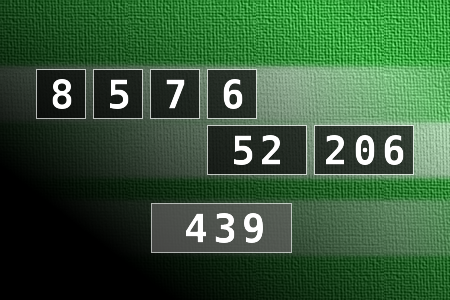
Calculate the number 439
NUMBERMANIA: Calculate the number 439 using numbers [8, 5, 7, 6, 52, 206] and basic arithmetic operations (+, -, *, /). Each of the numbers can be used only once.
Why parents go grey
The boss of a big company needed to call one of his employees about an urgent problem with one of the main computers. He dialed the employees home phone number and was greeted with a child's whispered, "Hello?"
Feeling put out at the inconvenience of having to talk to a youngster the boss asked, "Is your Daddy home?"
"Yes", whispered the small voice.
"May I talk with him?" the man asked. To the surprise of the boss, the small voice whispered, "No."
Wanting to talk with an adult, the boss asked, "Is your Mommy there?"
"Yes", came the answer.
"May I talk with her?" Again the small voice whispered, "no".
Knowing that it was not likely that a young child would be left home alone, the boss decided he would just leave a message with the person who should be there watching over the child. "Is there any one there besides you?" the boss asked the child.
"Yes" whispered the child, "A policeman".
Wondering what a cop would be doing at his employee's home, the boss asked, "May I speak with the policeman"?
"No, he's busy", whispered the child.
"Busy doing what?, asked the boss.
"Talking to Daddy and Mommy and the Fireman", came the whispered answer.
Growing concerned and even worried as he heard what sounded like a helicopter through the ear piece on the phone the boss asked, "What is that noise?"
"A hello-copper", answered the whispering voice. "What is going on there?", asked the boss, now alarmed. In an awed whispering voice the child answered, "The search team just landed the hello-copper"
Alarmed, concerned and more than just a little frustrated the boss asked, "Why are they there"?
Still whispering, the young voice replied along with a muffled giggle:
"They're looking for me"