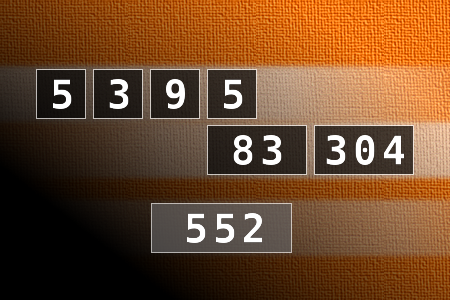

Calculate the number 552
NUMBERMANIA: Calculate the number 552 using numbers [5, 3, 9, 5, 83, 304] and basic arithmetic operations (+, -, *, /). Each of the numbers can be used only once.
Centipede pet
A single guy decides life would be more fun if he had a pet.
So he went to the pet store and told the owner that he wanted to buy an unusual pet. After some discussion, he finally bought a centipede, which came in a little white box to use for his house.
He took the box back home, found a good location for the box, and decided he would start off by taking his new pet to church with him. So he asked the centipede in the box, "Would you like to go to church with me today, we will have a good time."
But there was no answer from his new pet. This bothered him a bit, but he waited a few minutes and then asked him again, "How about going to church with me and receive blessings?"
But again, there was no answer from his new friend and pet. So he waited a few minutes more, thinking about the situation. He decided to ask him one more time; this time putting his face up against the centipede's house and shouting, "Hey, in there! Would you like to go to church with me and learn about The Lord???"
A little voice came out of the box:
"I heard you the first time! I'm putting on my shoes."