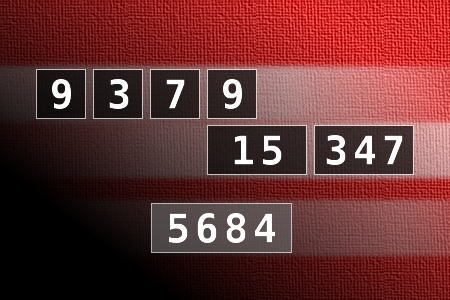
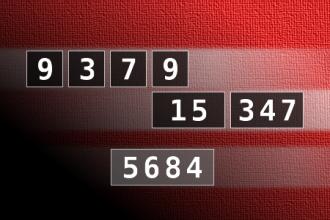
Calculate the number 5684
[6641] Calculate the number 5684 - NUMBERMANIA: Calculate the number 5684 using numbers [9, 3, 7, 9, 15, 347] and basic arithmetic operations (+, -, *, /). Each of the numbers can be used only once. - #brainteasers #math #numbermania - Correct Answers: 10 - The first user who solved this task is Nasrin 24 T
BRAIN TEASERS
enter your answer and press button OK

Calculate the number 5684

NUMBERMANIA: Calculate the number 5684 using numbers [9, 3, 7, 9, 15, 347] and basic arithmetic operations (+, -, *, /). Each of the numbers can be used only once.
Correct answers: 10
The first user who solved this task is Nasrin 24 T.
#brainteasers #math #numbermania
Register with your Google Account and start collecting points.
Check your ranking on list.

In light of the rising frequen...

In light of the rising frequency of human - grizzly bear conflicts, the Alaska Department of Fish and Game is advising hikers, hunters, and fishermen to take extra precautions and keep alert of bears while in the field. They advise that outdoorsmen wear noisy little bells on their clothing so as not to startle bears that aren't expecting them. They also advise outdoorsmen to carry pepper spray with them in case of an encounter with a bear. It is also a good idea to watch out for fresh signs of bear activity. Outdoorsmen should recognize the difference between black bear and grizzly bear dung. Black bear dung is smaller and contains lots of berries and squirrel fur. Grizzly bear dung has little bells in it and smells like pepper.
Jokes of the day - Daily updated jokes. New jokes every day.
Follow Brain Teasers on social networks

Brain Teasers

puzzles, riddles, mathematical problems, mastermind, cinemania...

Frans Cornelis Donders

Born 27 May 1818; died 24 Mar 1889 at age 70.Franciscus Cornelis Donders was a Dutch ophthalmologist, the most eminent of 19th-century Dutch physicians, whose investigations of the physiology and pathology of the eye made possible a scientific approach to the correction of refractive disabilities such as nearsightedness, farsightedness, and astigmatism. He found (1858) that hypermetropia (farsightedness) is caused by a shortening of the eyeball, so that light rays refracted by the lens of the eye converge behind the retina. He discovered (1862) that the blurred vision of astigmatism is caused by uneven and unusual surfaces of the cornea and lens, which diffuse light rays instead of focusing them.
This site uses cookies to store information on your computer. Some are essential to help the site properly. Others give us insight into how the site is used and help us to optimize the user experience. See our privacy policy.