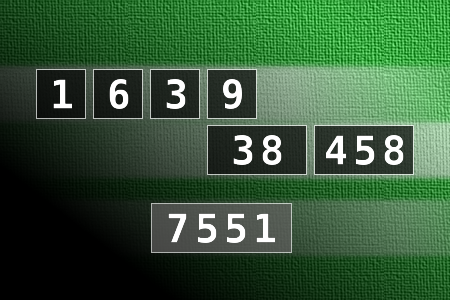
Calculate the number 7551
[2237] Calculate the number 7551 - NUMBERMANIA: Calculate the number 7551 using numbers [1, 6, 3, 9, 38, 458] and basic arithmetic operations (+, -, *, /). Each of the numbers can be used only once. - #brainteasers #math #numbermania - Correct Answers: 27 - The first user who solved this task is Roxana zavari
BRAIN TEASERS
enter your answer and press button OK

Calculate the number 7551

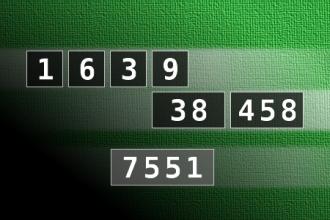
NUMBERMANIA: Calculate the number 7551 using numbers [1, 6, 3, 9, 38, 458] and basic arithmetic operations (+, -, *, /). Each of the numbers can be used only once.
Correct answers: 27
The first user who solved this task is Roxana zavari.
#brainteasers #math #numbermania
Register with your Google Account and start collecting points.
Check your ranking on list.

One Last Confession

While a man was dying, his wife was maintaining a candlelight vigil by his side. She held his fragile hand, tears running down her face.
Her praying woke him from his slumber. He looked up, and his pale lips began to move slightly.
"My darling," he whispered.
"Hush, my love," she said. "Rest, don't talk."
He was insistent. "I have something that I must confess," he said in a tired voice.
"There isn't anything to confess," replied his weeping wife. "Everything's ok. Go to sleep."
The man blurted out: "No, no, I must die in peace. I...I slept with your sister, your best friend, her best friend, and your mother!"
"I know," whispered his wife, "that's why I poisoned you."

Jokes of the day - Daily updated jokes. New jokes every day.
Follow Brain Teasers on social networks

Brain Teasers

puzzles, riddles, mathematical problems, mastermind, cinemania...

Sir J.J. Thomson

Died 30 Aug 1940 at age 83 (born 18 Dec 1856). Joseph John Thomson was an English physicist who helped revolutionize the knowledge of atomic structure by his discovery of the electron (1897). He received the Nobel Prize for Physics in 1906 and was knighted in 1908. Thomson experimented with currents of electricity inside empty glass tubes, investigating a long-standing puzzle known as “cathode rays.” His experiments prompted him to make a bold proposal: these mysterious rays are streams of particles much smaller than atoms. He called these particles “corpuscles,” and suggested that they might make up all of the matter in atoms. It was startling to imagine particles inside the atom at a time when most people thought that the atom was indivisible, the most fundamental unit of matter.
This site uses cookies to store information on your computer. Some are essential to help the site properly. Others give us insight into how the site is used and help us to optimize the user experience. See our privacy policy.