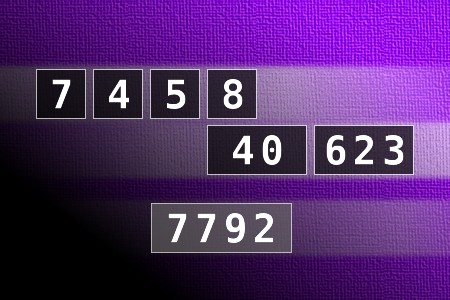
Calculate the number 7792
[7326] Calculate the number 7792 - NUMBERMANIA: Calculate the number 7792 using numbers [7, 4, 5, 8, 40, 623] and basic arithmetic operations (+, -, *, /). Each of the numbers can be used only once. - #brainteasers #math #numbermania - Correct Answers: 2
BRAIN TEASERS
enter your answer and press button OK

Calculate the number 7792

NUMBERMANIA: Calculate the number 7792 using numbers [7, 4, 5, 8, 40, 623] and basic arithmetic operations (+, -, *, /). Each of the numbers can be used only once.
Correct answers: 2
#brainteasers #math #numbermania
Register with your Google Account and start collecting points.
Check your ranking on list.

Whenever

Whenever you feel sad, just remember that somewhere in this world there's an idiot pulling a door that says “push”
Jokes of the day - Daily updated jokes. New jokes every day.
Follow Brain Teasers on social networks

Brain Teasers

puzzles, riddles, mathematical problems, mastermind, cinemania...

John Tradescant

Died 22 Apr 1662 at age 53 (born 4 Aug 1608).English botanist and gardener who was appointed by King Charles I as Keeper of his Majesty's Gardens, Vines, and Silkworms at Oatlands Palace in Surrey, where he continued the work of his father John Tradescant the Elder (c.1570-1638). Together, they were among the earliest English botanists, who introduced to England many of the best known garden plants, fruit trees including apricots, and the horse chestnut. After his apprenticeship, John Tradescant the Younger became a freeman of the Worshipful Company of Gardeners (1634). Three years later, he went to Virginia on a botanical collection expedition (1637-38) “to gather up all raritye of flowers, plants, shells.” His father had served similarly for the king from 1630, travelling abroad several times to bring back new plant species. The son succeeded to the post at Oatland Palace upon his father's death in 1638. By 1656, his garden had over 1600 named plants in cultivation. The Tradescant curiosities - fish, weapons, birds, even a stuffed dodo passed into Elias Ashmole's collection that he contributed for the Ashmolian Museum at Oxford University (1683), the first public museum in Britain.«
This site uses cookies to store information on your computer. Some are essential to help the site properly. Others give us insight into how the site is used and help us to optimize the user experience. See our privacy policy.