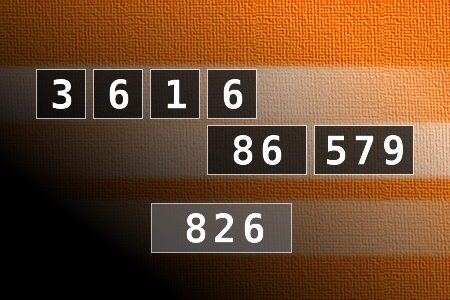
Calculate the number 826
[7792] Calculate the number 826 - NUMBERMANIA: Calculate the number 826 using numbers [3, 6, 1, 6, 86, 579] and basic arithmetic operations (+, -, *, /). Each of the numbers can be used only once. - #brainteasers #math #numbermania - Correct Answers: 1
BRAIN TEASERS
enter your answer and press button OK

Calculate the number 826

NUMBERMANIA: Calculate the number 826 using numbers [3, 6, 1, 6, 86, 579] and basic arithmetic operations (+, -, *, /). Each of the numbers can be used only once.
Correct answers: 1
#brainteasers #math #numbermania
Register with your Google Account and start collecting points.
Check your ranking on list.

Helping A Blond Lose Weight

A blonde is overweight, so her doctor puts her on a diet.
"I want you to eat regularly for two days, then skip a day, and repeat the procedure for two weeks. The next time I see you, you'll have lost at least five pounds."
When the blonde returns, she's lost nearly 20 pounds.
"Why, that's amazing!" the doctor says. "Did you follow my instructions?"
The blonde nods. "I'll tell you, though, I thought I was going to drop dead that third day." "From hunger, you mean?" said the doctor.
"No, from skipping," replied the blonde.
Jokes of the day - Daily updated jokes. New jokes every day.
Follow Brain Teasers on social networks

Brain Teasers

puzzles, riddles, mathematical problems, mastermind, cinemania...

Ozone hole

In 2000, NASA data showed the hole at just under 11 million square miles, the biggest it had ever been to date. Record low temperatures in the stratosphere are believed to have helped the expansion of the ozone hole during the southern hemisphere's spring season. Antarctic ozone depletion starts in July, when sunlight triggers chemical reactions in cold air trapped over the South Pole during the Antarctic winter. It intensifies during August and September before tailing off as temperatures rise in late November of early December. Depletion of the ozone layer over Antarctica and the Arctic is being monitored because ozone protects Earth from harmful ultraviolet radiation. By 9 Sep 2000, the hole had grown over Chile, exposing a populated city for the first time. A larger hole was recorded on 24 Sep 2006.Image, compiled from NASA's Total Ozone Mapping Spectrometer instrument onboard the Earth Probe satellite, reveals how the ozone hole (in deep blue) has extended as far as southern Chile.
This site uses cookies to store information on your computer. Some are essential to help the site properly. Others give us insight into how the site is used and help us to optimize the user experience. See our privacy policy.