
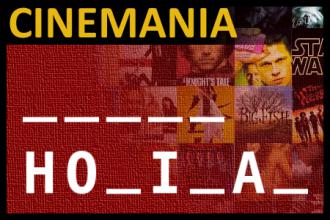
CINEMANIA: Guess the movie title
Film was made in 1953.Correct answers: 63
The first user who solved this task is Sanja Šabović.
#brainteasers #movie #film #cinemania

Ed and Ted met for the first t...
Ed and Ted met for the first time in twenty years. "So, how's life been for you?" Ed asked.
"Not too good," Ted replied. "My first wife died of cancer, my second wife turned out to be a lesbian and ran off with another woman and took all our savings, my son's in prison for trying to kill me, my daughter got run over by a bus, my house was hit by a low-flying aircraft, my vintage car rolled off the dockside into the sea, I had to have my dog put down recently, my doctor says that I have an incurable disease and to cap it all my business has just gone bust."
"Oh dear, that sounds terrible." Ed said. "What business were you in?"
"I sell lucky charms," said Ted.
"Not too good," Ted replied. "My first wife died of cancer, my second wife turned out to be a lesbian and ran off with another woman and took all our savings, my son's in prison for trying to kill me, my daughter got run over by a bus, my house was hit by a low-flying aircraft, my vintage car rolled off the dockside into the sea, I had to have my dog put down recently, my doctor says that I have an incurable disease and to cap it all my business has just gone bust."
"Oh dear, that sounds terrible." Ed said. "What business were you in?"
"I sell lucky charms," said Ted.