Find the right combination
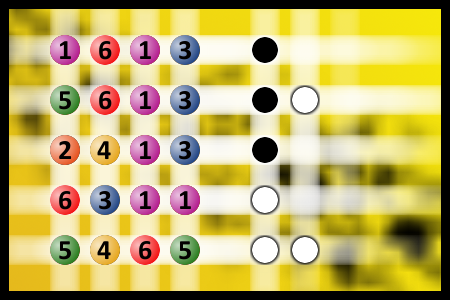
The computer chose a secret code (sequence of 4 digits from 1 to 6). Your goal is to find that code. Black circles indicate the number of hits on the right spot. White circles indicate the number of hits on the wrong spot.Correct answers: 46
The first user who solved this task is James Lillard.
#brainteasers #mastermind

A lady walks into the drug sto...
A lady walks into the drug store and asks the druggist for some arsenic.
The druggist asks, "Ma'am, what do you want with arsenic?"
The lady says, "To kill my husband."
"I can't sell you any for that reason," says the druggist.
The lady then reaches into her purse and pulls out a photo of a man and a woman in a compromising position, the man is her husband and the lady is the druggist's wife, and shows it to the druggist.
He looks at the photo and says, "Oh I didn't know you had a prescription!"
The druggist asks, "Ma'am, what do you want with arsenic?"
The lady says, "To kill my husband."
"I can't sell you any for that reason," says the druggist.
The lady then reaches into her purse and pulls out a photo of a man and a woman in a compromising position, the man is her husband and the lady is the druggist's wife, and shows it to the druggist.
He looks at the photo and says, "Oh I didn't know you had a prescription!"